
Introduction
Smart Robots for Home – Future Is Here, Robots weren’t a reality for most people just a few years ago. These days they’re sitting in living rooms, cleaning floors, and even babysitting children and senior parents. Smart robots for home are not just a reality, they are accelerating even more than anticipated. They’re not all error-proof, but they are improving year by year. If you have a small apartment or a big house, there’s bound to be a home robot to suit your lifestyle. This article explains all you need to know before you purchase one — and before you even consider purchasing one.
The science behind how home robots work.

The majority of home robots rely on a combination of sensors, cameras, and artificial intelligence for the perception of their environment. They are able to chart your residence, find barriers, and adapt to your lifestyle over time.
For instance, the robot vacuum doesn’t wander around aimlessly. It looks around the room and makes a digital map, and calculates the most effective way to clean the floor. Others can even recall which rooms you use the most.
This is the same as voice assistants such as Amazon Echo or Google Nest. They understand and respond to what you say, connect to the internet, and execute commands—all in seconds. Although the devices appear straightforward on the exterior, the technology used in these devices is quite advanced.
Types of Smart Robots for Home – A Quick Overview
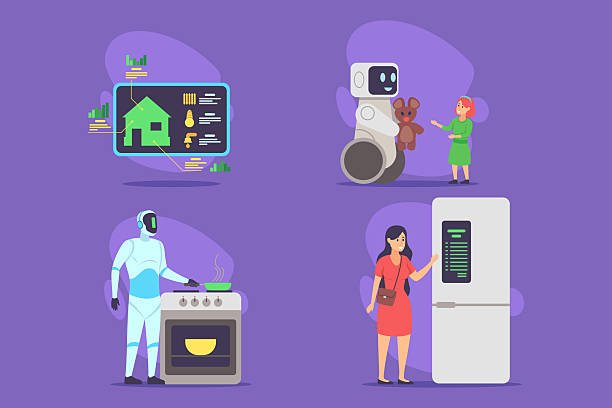
There are several types of home robots available today. Some are designed for cleaning, others for security, and some just for fun and companionship. Here’s a simple breakdown to help you understand the differences:
| Feature | Type / Option | Description |
|---|---|---|
| Cleaning | Robot Vacuum (e.g., Roomba) | Automatically cleans floors using sensors and mapping technology |
| Security | Patrol Robot (e.g., Arlo) | Monitors your home, sends alerts, and streams live video |
| Companion | Social Robot (e.g., Moxie) | Interacts with kids or elderly people through conversation and games |
| Lawn Care | Robotic Lawn Mower | Cuts grass automatically based on a preset schedule |
| Kitchen Help | Cooking Robot (e.g., Thermomix) | Assists with meal prep, mixing, and following recipes |
Each type serves a different need. Think about what part of your daily routine takes the most time or energy. That’s usually where a home robot can help the most.
Home robotics buying tips before you purchase.
The first step is to establish a budget. Based on their function, home robots cost between $50 and more than $3,000. It’s not necessary to have the most expensive to make the best.
Second, look for authentic customer reviews. Not only the ratings but the feedback from the users after using the robot for several months. Early and long term reviews can give vastly different answers.
Third, make sure that the robot will be able to function with your current home automation system. If you use Alexa, Google Home or Apple Homekit, just ensure that the robot is compatible before buying it.
In addition, consider maintenance! The majority of robots require filter changes, software updates and cleaning from time to time. These are cumulative expenses and should be taken into account when making a purchase.
Disadvantages of a Home Robot
Time is the greatest benefit. Your floors will be swept every day while you are at work by a robotic vacuum cleaner. That is hours of chores that you don’t have to do.
Domestic robots also minimize physical stress. A robot that can sweep, mop or retrieve objects can greatly improve the daily comfort and independence of older individuals or those with a disability.
Homeowners can have peace of mind with security robots. You can follow up on your home even when in transit, and receive immediate alerts if something weird happens. That type of consciousness used to call for employing a security firm.
Last, but not least, there are robots that make life fun. A companion robot may keep children entertained and help children to learn, or a smart speaker robot can play music and set reminders and answer questions in seconds.
The most common errors that are made with home robots.
The number one error is purchasing a robot without an understanding of it. A lot of people purchase a robot vacuum but never install the robot app or establish the cleaning routine. They find themselves using it just like a regular vacuum — and that’s not the idea.
One of the other blunders is failing to update software. Home robots, like your cellphone, are improving over time. Without these, your device can be slower and not as secure.
Also, humans forget to set up their house for the robot. Loose cords, small rugs, and clutter on the floor can cause confusion or damage to robot vacuums. Just a couple of minutes of preparation can make a difference.
Help with the best use of home robots from experts.
Experts in tech recommend to begin with one robot. Know how it operates, make the necessary adjustments, and see it fit into your schedule before connecting more devices.
Also, it can help you name your robot and set a timetable for it. Research indicates that utilizing home robots as instruments (as opposed to toys) yields long-term value.
Lastly, connect your robot to your phone. The majority of home robots come with an app that allows you to control the robot, get detailed reports and customizations. Not using the app is analogous to someone who purchased a smartphone and only used it for talking.
Home smart robots: What you need to know about smart robots in the home.
Q1: Is it safe to use smart robot in children’s house?
Yes, most of them have safety features such as obstacle detection and auto-shut-off. Be sure to review age recommendations and monitor the use of new technologies with children.
Q2: What is the average lifespan of home robots?
Most home robots have a life of 4-7 years with proper care. They have a long useful life if they are regularly cleaned and software is upgraded.
Answer: No home robots work without Wi-Fi.
There are a few basic features that can be used without an internet connection, but the majority of functions, such as app control and updates, do need a solid internet connection.
Conclusion
Smart robots for home use are no longer a distant possibility, but a reality for millions of people. They’re useful, inexpensive and smarter by the year, capable of cleaning your floors to ensuring your home is secure. They don’t require technical expertise to use. Make it small, do some research and choose a robot which can solve a problem in your life. This technology is continually changing, and as it does so, those who jump in first will be in a much better position to face what is next. The future isn’t in the future, the future is right now.
Leave a Reply