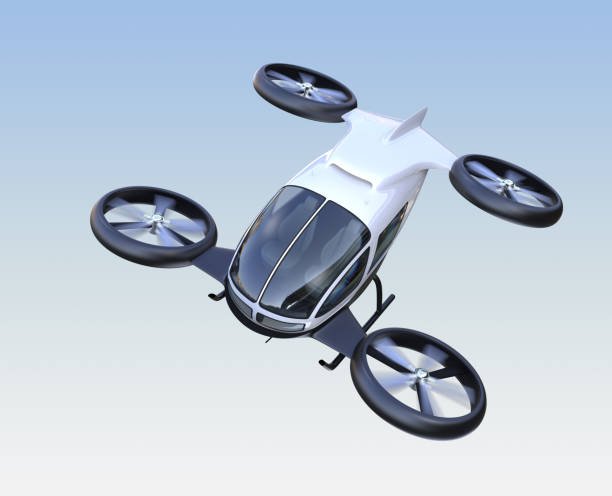
Flying Cars – Reality or Hype in 2026?, IntroductionFlying cars have been a part of science fiction films and childhood fantasies for several decades now. However, in recent times, something has been changing. Businesses announcing test flights. Governments are creating new regulations. Billions of dollars are being invested. So, the main question is: Is flying car a reality in 2026 or hype? So let’s break it down and decide what we believe and what we wait and hope to get excited about soon.
Flying Cars: What are they and How do they work?
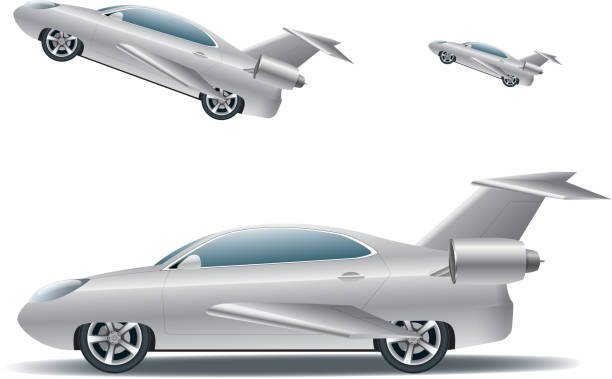
When people think of a flying car they think of a car with wings. However, it’s not quite as it appears. The vast majority of contemporary flying car designs are nearer to massive drones or small electric planes. They are intended to carry one or two persons, launch vertically and to fly for a short range.
Such vehicles are sometimes referred to as “eVTOLs” (electric vertical takeoff and landing aircraft). They are like a combination of a helicopter and a drone, but more intelligent and silent. Other firms such as Joby Aviation, Lilium, and Archer Aviation have been developing these over the years.
The technology is primarily electric battery powered. This is equivalent to reduced emissions over traditional helicopters. It also means quieter engines, which could be a big factor if they are to be flying over cities someday.
So that you can take part in this industry, here are some practical tips for you:
For those who are technologically inclined, investors, or simply interested in the concept of flying cars in 2026, these grounded tips should come in handy:
Don’t take all launch dates for granted. It has been in the history of the industry to postpone the deadlines. Often a “2025 commercial launch” turns out to be a “2027 commercial launch” quietly. Keep up to date but don’t lose your patience.
Stay abreast of regulatory updates. It is the FAA in the U.S. and EASA in Europe who determine when these aircraft are allowed to fly passengers. If the weather is not approved, then no flying. Listen to their proclamation.
Don’t look at renders, look at real test flights. There are many companies that produce great videos and 3D animations. It’s okay, but real test flight videos and results are far more important.
A Quick Look at the Leading Flying Car Companies in 2026
There are several players in this space right now. Some are well-funded startups. Others have partnerships with big names like Toyota, United Airlines, and even the U.S. military. Here’s a simple comparison of some major players and their vehicles:
| Feature | Option / Type | Description |
|---|---|---|
| Joby Aviation S4 | eVTOL Aircraft | Carries 1 pilot + 4 passengers; top speed around 200 mph |
| Archer Midnight | Urban Air Taxi | Designed for short city trips; quiet electric motors |
| Lilium Jet | Electric Jet-Powered | Uses small electric jets; aimed at regional travel |
| Wisk Aero Cora | Autonomous eVTOL | Fully self-flying; no human pilot needed |
| PAL-V Liberty | Road + Air Hybrid | Actual car that converts to a gyroplane; road-legal in some countries |
Each of these takes a slightly different approach. Some focus on city air taxis. Others want to replace short regional flights. A few are even trying to make vehicles that drive on roads and fly in the air — a true flying car in the classic sense.
There are real benefits to the use of Flying Cars if they actually come to pass.
If the flying cars become commonplace, the benefits could be truly amazing. Let’s face reality about what can be accomplished.
The greatest advantage is that people can commute quickly. One trip by car takes 45 minutes, one trip by plane takes 10 minutes. That’s a game changer for those in large cities.
This is another positive effect — the decongested roads. Even if a large percentage of urban commuters relocates to the sky, it’s possible that there would be a dramatic reduction in traffic congestion at ground level.
Emergency service personnel might also benefit. Small, intelligent flying vehicles would speed up and cost less air ambulance services, disaster response, and search and rescue missions.
A few pitfalls to avoid when considering this technology.
The first error we can make is to believe that flying cars will be available for the masses in the near future. Initial versions will come with a price tag of up to a luxury car or upwards. They will be available on a first come first served basis for those who can afford to be early adopters.
Another error is to overlook safety issues. Real problems of battery failure, software issues and weather. These are not issues which can be solved in a single night.
Individuals also need to remember about airspace. Someone has to deal with all these if they are flying overhead cities and hundreds of them. It’s an enormous infrastructure issue that remains to be addressed.
With his expertise, he provides tips on where the industry is going.He shares his knowledge with expert tips on the direction of the industry.
Experts in aviation and urban transportation believe the end of the day, the most likely near-term application is for air taxi services rather than personal use. It’s Uber, but in the air! You would make a booking, get in the airplane and fly to your destination.
While commercial service is being announced and rolled out in select cities in 2026 or 2027, analysts believe that real mass adoption is likely 8–15 years away. Keep an eye on Dubai, Los Angeles and Singapore – these are the most likely testing grounds.
Some basic questions about flying cars.
Q1. Is it possible to purchase a flying car today?
There are a few models, such as the PAL-V Liberty, that are technically available for sale in certain areas, but the majority of eVTOLs are still in testing stages and are not yet offered to the public.
Q2: What is the safeness of flying cars?
There are high standards of safety in place. The majority of companies are earmarking for FAA certification, a rigorous test that needs to be passed. In many countries, they are not yet qualified for public use.
Q3: What is the cost of a flying car?
Personal models are estimated to cost anywhere from $150,000 to more than $500,000. The price of air taxi rides will begin at $50-$150 per trip, depending on the city.
Conclusion
So, will flying cars be a reality or a hype in 2026? True, it’s a bit of both. Progress is real: test flights are real, certifications are in motion, and investment in serious. But day-to-day commuters will be dodging all traffic jams from the sky any day soon. Flying cars are not far off, but they are not here yet – at least not in the mass market. The smart move? Be prepared, be practical, and take pleasure in seeing one of the finest technology stories of all time.
Leave a Reply