Category: Future Tech

  • Flying Cars – Reality or Hype in 2026?

    Flying Cars – Reality or Hype in 2026?

    Flying Cars – Reality or Hype in 2026?, IntroductionFlying cars have been a part of science fiction films and childhood fantasies for several decades now. However, in recent times, something has been changing. Businesses announcing test flights. Governments are creating new regulations. Billions of dollars are being invested. So, the main question is: Is flying car a reality in 2026 or hype? So let’s break it down and decide what we believe and what we wait and hope to get excited about soon.

    Flying Cars: What are they and How do they work?

    Flying Cars: What are they and How do they work?

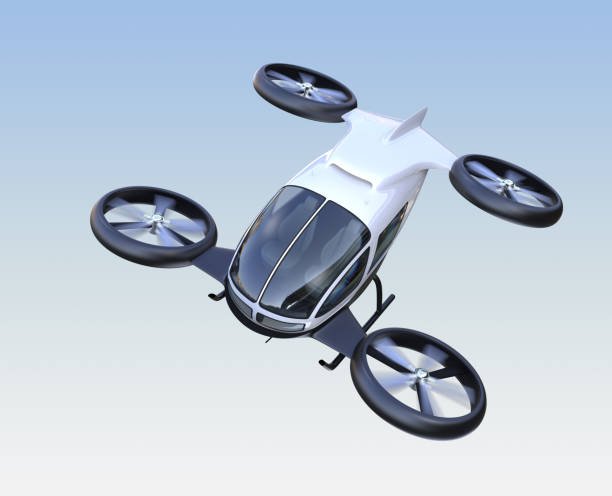
    When people think of a flying car they think of a car with wings. However, it’s not quite as it appears. The vast majority of contemporary flying car designs are nearer to massive drones or small electric planes. They are intended to carry one or two persons, launch vertically and to fly for a short range.

    Such vehicles are sometimes referred to as “eVTOLs” (electric vertical takeoff and landing aircraft). They are like a combination of a helicopter and a drone, but more intelligent and silent. Other firms such as Joby Aviation, Lilium, and Archer Aviation have been developing these over the years.

    The technology is primarily electric battery powered. This is equivalent to reduced emissions over traditional helicopters. It also means quieter engines, which could be a big factor if they are to be flying over cities someday.

    So that you can take part in this industry, here are some practical tips for you:

    For those who are technologically inclined, investors, or simply interested in the concept of flying cars in 2026, these grounded tips should come in handy:

    Don’t take all launch dates for granted. It has been in the history of the industry to postpone the deadlines. Often a “2025 commercial launch” turns out to be a “2027 commercial launch” quietly. Keep up to date but don’t lose your patience.

    Stay abreast of regulatory updates. It is the FAA in the U.S. and EASA in Europe who determine when these aircraft are allowed to fly passengers. If the weather is not approved, then no flying. Listen to their proclamation.

    Don’t look at renders, look at real test flights. There are many companies that produce great videos and 3D animations. It’s okay, but real test flight videos and results are far more important.

    A Quick Look at the Leading Flying Car Companies in 2026

    There are several players in this space right now. Some are well-funded startups. Others have partnerships with big names like Toyota, United Airlines, and even the U.S. military. Here’s a simple comparison of some major players and their vehicles:

    FeatureOption / TypeDescription
    Joby Aviation S4eVTOL AircraftCarries 1 pilot + 4 passengers; top speed around 200 mph
    Archer MidnightUrban Air TaxiDesigned for short city trips; quiet electric motors
    Lilium JetElectric Jet-PoweredUses small electric jets; aimed at regional travel
    Wisk Aero CoraAutonomous eVTOLFully self-flying; no human pilot needed
    PAL-V LibertyRoad + Air HybridActual car that converts to a gyroplane; road-legal in some countries

    Each of these takes a slightly different approach. Some focus on city air taxis. Others want to replace short regional flights. A few are even trying to make vehicles that drive on roads and fly in the air — a true flying car in the classic sense.

    There are real benefits to the use of Flying Cars if they actually come to pass.

    If the flying cars become commonplace, the benefits could be truly amazing. Let’s face reality about what can be accomplished.

    The greatest advantage is that people can commute quickly. One trip by car takes 45 minutes, one trip by plane takes 10 minutes. That’s a game changer for those in large cities.

    This is another positive effect — the decongested roads. Even if a large percentage of urban commuters relocates to the sky, it’s possible that there would be a dramatic reduction in traffic congestion at ground level.

    Emergency service personnel might also benefit. Small, intelligent flying vehicles would speed up and cost less air ambulance services, disaster response, and search and rescue missions.

    A few pitfalls to avoid when considering this technology.

    The first error we can make is to believe that flying cars will be available for the masses in the near future. Initial versions will come with a price tag of up to a luxury car or upwards. They will be available on a first come first served basis for those who can afford to be early adopters.

    Another error is to overlook safety issues. Real problems of battery failure, software issues and weather. These are not issues which can be solved in a single night.

    Individuals also need to remember about airspace. Someone has to deal with all these if they are flying overhead cities and hundreds of them. It’s an enormous infrastructure issue that remains to be addressed.

    With his expertise, he provides tips on where the industry is going.He shares his knowledge with expert tips on the direction of the industry.

    Experts in aviation and urban transportation believe the end of the day, the most likely near-term application is for air taxi services rather than personal use. It’s Uber, but in the air! You would make a booking, get in the airplane and fly to your destination.

    While commercial service is being announced and rolled out in select cities in 2026 or 2027, analysts believe that real mass adoption is likely 8–15 years away. Keep an eye on Dubai, Los Angeles and Singapore – these are the most likely testing grounds.

    Some basic questions about flying cars.

    Q1. Is it possible to purchase a flying car today?
    There are a few models, such as the PAL-V Liberty, that are technically available for sale in certain areas, but the majority of eVTOLs are still in testing stages and are not yet offered to the public.

    Q2: What is the safeness of flying cars?
    There are high standards of safety in place. The majority of companies are earmarking for FAA certification, a rigorous test that needs to be passed. In many countries, they are not yet qualified for public use.

    Q3: What is the cost of a flying car?
    Personal models are estimated to cost anywhere from $150,000 to more than $500,000. The price of air taxi rides will begin at $50-$150 per trip, depending on the city.

    Conclusion

    So, will flying cars be a reality or a hype in 2026? True, it’s a bit of both. Progress is real: test flights are real, certifications are in motion, and investment in serious. But day-to-day commuters will be dodging all traffic jams from the sky any day soon. Flying cars are not far off, but they are not here yet – at least not in the mass market. The smart move? Be prepared, be practical, and take pleasure in seeing one of the finest technology stories of all time.


  • Smart Robots for Home – Future Is Here

    Smart Robots for Home – Future Is Here

    Introduction

    Smart Robots for Home – Future Is Here, Robots weren’t a reality for most people just a few years ago. These days they’re sitting in living rooms, cleaning floors, and even babysitting children and senior parents. Smart robots for home are not just a reality, they are accelerating even more than anticipated. They’re not all error-proof, but they are improving year by year. If you have a small apartment or a big house, there’s bound to be a home robot to suit your lifestyle. This article explains all you need to know before you purchase one — and before you even consider purchasing one.

    The science behind how home robots work.

    The science behind how home robots work.

    The majority of home robots rely on a combination of sensors, cameras, and artificial intelligence for the perception of their environment. They are able to chart your residence, find barriers, and adapt to your lifestyle over time.

    For instance, the robot vacuum doesn’t wander around aimlessly. It looks around the room and makes a digital map, and calculates the most effective way to clean the floor. Others can even recall which rooms you use the most.

    This is the same as voice assistants such as Amazon Echo or Google Nest. They understand and respond to what you say, connect to the internet, and execute commands—all in seconds. Although the devices appear straightforward on the exterior, the technology used in these devices is quite advanced.

    Types of Smart Robots for Home – A Quick Overview

    Types of Smart Robots for Home – A Quick Overview

    There are several types of home robots available today. Some are designed for cleaning, others for security, and some just for fun and companionship. Here’s a simple breakdown to help you understand the differences:

    FeatureType / OptionDescription
    CleaningRobot Vacuum (e.g., Roomba)Automatically cleans floors using sensors and mapping technology
    SecurityPatrol Robot (e.g., Arlo)Monitors your home, sends alerts, and streams live video
    CompanionSocial Robot (e.g., Moxie)Interacts with kids or elderly people through conversation and games
    Lawn CareRobotic Lawn MowerCuts grass automatically based on a preset schedule
    Kitchen HelpCooking Robot (e.g., Thermomix)Assists with meal prep, mixing, and following recipes

    Each type serves a different need. Think about what part of your daily routine takes the most time or energy. That’s usually where a home robot can help the most.

    Home robotics buying tips before you purchase.

    The first step is to establish a budget. Based on their function, home robots cost between $50 and more than $3,000. It’s not necessary to have the most expensive to make the best.

    Second, look for authentic customer reviews. Not only the ratings but the feedback from the users after using the robot for several months. Early and long term reviews can give vastly different answers.

    Third, make sure that the robot will be able to function with your current home automation system. If you use Alexa, Google Home or Apple Homekit, just ensure that the robot is compatible before buying it.

    In addition, consider maintenance! The majority of robots require filter changes, software updates and cleaning from time to time. These are cumulative expenses and should be taken into account when making a purchase.

    Disadvantages of a Home Robot

    Time is the greatest benefit. Your floors will be swept every day while you are at work by a robotic vacuum cleaner. That is hours of chores that you don’t have to do.

    Domestic robots also minimize physical stress. A robot that can sweep, mop or retrieve objects can greatly improve the daily comfort and independence of older individuals or those with a disability.

    Homeowners can have peace of mind with security robots. You can follow up on your home even when in transit, and receive immediate alerts if something weird happens. That type of consciousness used to call for employing a security firm.

    Last, but not least, there are robots that make life fun. A companion robot may keep children entertained and help children to learn, or a smart speaker robot can play music and set reminders and answer questions in seconds.

    The most common errors that are made with home robots.

    The number one error is purchasing a robot without an understanding of it. A lot of people purchase a robot vacuum but never install the robot app or establish the cleaning routine. They find themselves using it just like a regular vacuum — and that’s not the idea.

    One of the other blunders is failing to update software. Home robots, like your cellphone, are improving over time. Without these, your device can be slower and not as secure.

    Also, humans forget to set up their house for the robot. Loose cords, small rugs, and clutter on the floor can cause confusion or damage to robot vacuums. Just a couple of minutes of preparation can make a difference.

    Help with the best use of home robots from experts.

    Experts in tech recommend to begin with one robot. Know how it operates, make the necessary adjustments, and see it fit into your schedule before connecting more devices.

    Also, it can help you name your robot and set a timetable for it. Research indicates that utilizing home robots as instruments (as opposed to toys) yields long-term value.

    Lastly, connect your robot to your phone. The majority of home robots come with an app that allows you to control the robot, get detailed reports and customizations. Not using the app is analogous to someone who purchased a smartphone and only used it for talking.

    Home smart robots: What you need to know about smart robots in the home.

    Q1: Is it safe to use smart robot in children’s house?
    Yes, most of them have safety features such as obstacle detection and auto-shut-off. Be sure to review age recommendations and monitor the use of new technologies with children.

    Q2: What is the average lifespan of home robots?
    Most home robots have a life of 4-7 years with proper care. They have a long useful life if they are regularly cleaned and software is upgraded.

    Answer: No home robots work without Wi-Fi.
    There are a few basic features that can be used without an internet connection, but the majority of functions, such as app control and updates, do need a solid internet connection.

    Conclusion

    Smart robots for home use are no longer a distant possibility, but a reality for millions of people. They’re useful, inexpensive and smarter by the year, capable of cleaning your floors to ensuring your home is secure. They don’t require technical expertise to use. Make it small, do some research and choose a robot which can solve a problem in your life. This technology is continually changing, and as it does so, those who jump in first will be in a much better position to face what is next. The future isn’t in the future, the future is right now.

  • Best VR Headsets 2026 – Immersive Experience Guide

    Best VR Headsets 2026 – Immersive Experience Guide

    Introduction

    Best VR Headsets 2026 – Immersive Experience Guide, Virtual reality (VR) has evolved. From a fantasy to real life, it’s now in your living room. If you’re considering a new headset for the new year, you may be feeling a little dizzy. There’s everything from affordable to high-end and a lot of different brands to choose from. So we’ve created this best VR headsets 2026 – immersive experience shopping list. Whether you’re looking for a gaming headset, a headset to start a fitness routine, or just want to explore a virtual world, in this article, we’ll make it easy for you to choose the right headset without having to deal with confusing tech terms.

    How VR has Evolved this Year?

    Best VR Headsets 2026 – Immersive Experience Guide

    The state of VR in 2016 is a lot different to 2014. Resolutions are higher. The majority of mid-end headsets now provide at least a 4K per eye display – meaning no more “screen door” effect that some headsets used to have. And head tracking is better. Inside-out tracking – using the headset’s cameras to track your head movement – is almost as accurate as it could be, and doesn’t require external sensors.

    Battery life is still a problem, but has improved. Now the typical standalone headset will offer some three hours of continuous use on a charge. That’s up from an hour and a half we had to put up with just a few years ago.

    There’s also been a lot of improvements when it comes to comfort. Thanks to the use of lighter materials, weight distribution and ventilation, it’s much more comfortable to wear a headset for extended periods. If you’ve played VR in the past and got turned off by the discomfort of the weight and heat, try again.

    Comparing the Best VR Headsets 2026 – Top Picks at a Glance

    Choosing the right headset depends on what matters most to you. Some people want the sharpest visuals. Others care more about price or game library. Here’s a quick comparison to help you narrow things down.

    FeatureOption / TypeDescription
    Best OverallStandalone Premium HeadsetHigh-res display, long battery life, large app library, no PC required
    Best for PC GamingTethered PC VR HeadsetTop-tier graphics powered by your gaming PC, wired connection for zero latency
    Best Budget OptionEntry-Level StandaloneAffordable price point, decent display, great for beginners and casual users
    Best for FitnessLightweight Active HeadsetSweat-resistant design, secure fit, built-in workout tracking features
    Best for Mixed RealityPassthrough AR/VR HybridHigh-quality color passthrough cameras, blends virtual objects with real world

    Each category serves a different kind of user. There’s no single “best” headset for everyone. Think about how you’ll actually use it before spending your money.

    What to Consider when Buying a VR Headset

    If you’re buying a VR headset for the first time, here are a few tips. The first is the app store. Having a headset with all the bells and whistles is useless without games and other apps to play. Check out the store.

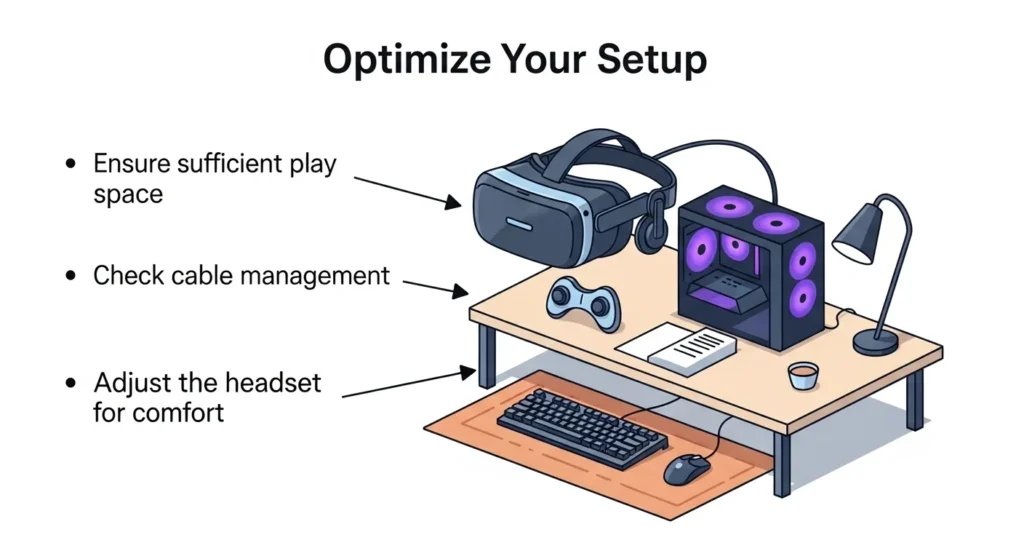
    Second, consider where you’re going to play. Some VR is done in a wide open space. Others can be played in a seated position. Do the maths and work out the space.

    Third, don’t forget the accessories. This could be a comfortable head strap, prescription lens inserts if you wear glasses and a carrying case. These items can transform a “good” set up to an “excellent” set up.

    What Having a VR Headset Will Do for You in 2016

    What Having a VR Headset Will Do for You in 2016

    Virtual reality isn’t limited to games. Users are getting massages, travelling the world, learning languages and even attending work meetings. There’s a lot of possibilities.

    Exercise is a rapidly-growing market. You can get a great workout without even realising it from boxing and dance games. It’s not really exercise, making it an ideal workout for people who dislike more conventional exercise.

    And social VR sites have improved. Hang out with friends, go to concerts or watch movies on a virtual screen. This is significant for those in long distance relationships, or with friends living abroad.

    Here’s What to Steer Clear of When Purchasing a VR Headset

    A common mistake is doing the “fear of missing out” when buying. Popularity on the internet doesn’t necessarily mean it will be a good choice. Be sure to read several reviews and watch “unboxings”.

    Don’t make the mistake of overlooking comfort. If you have trouble wearing it for 20 minutes, you won’t want to wear it for longer. If you can, test headsets before buying; if not, go for a company with a generous returns policy.

    But people don’t consider the cost of ownership. Some have individual charges for apps. Others have subscription-based service. Be sure to take this into account when budgeting.

    And lastly, consider software updates. If the company that owns the headset continues to release updates and tweaks, you’ll get more out of your headset than one that is forgotten after its release.

    Use these tips to get the most out of VR

    Use these tips to get the most out of VR

    Take it slow. Although it will be more comfortable, your eyes and body will still need to get used to it. This will be a start of 20-30 minutes. Slowly build up to longer times.

    Use clean lenses. Only use a microfiber cloth – not paper towels or other cloths. Scratches can’t be removed and hinder your experience.

    Get a good Wi-Fi connection (if using a standalone headset) Many applications and games stream media and low signal results in lag and stutters. Wi-Fi 6E or Wi-Fi 7 routers are best.

    Organise your games. It’s easy to get a lot of apps. Make categories or favourites to quickly find what you are looking for.

    Frequently Asked Questions

    Q1: Is it OK for children to use VR headsets?
    Generally VR is recommended for children 13 years and older. The eyes of young children are still growing and it’s best to restrict play and adhere to the manufacturer’s age recommendations.

    Q2: Do I need a powerful PC?
    Not necessarily. Standalone headsets are computerless gaming headsets. But PC-connected headsets have better graphics, and are favoured by gamers.

    Q3: What will it cost to get a quality VR headset in 2016?
    Entry level headsets are $200 – $300. Middle of the road models are $400 – $600. Top-end headsets are more than $800. The best price will depend on your requirements and usage.

    Conclusion

    There’s no need to fret when buying a VR headset. Thanks to clearer screens, more comfortable headsets and a wealth of content, it’s a great year to experience VR. Our guide to the best VR headsets 2026 – immersive experience should have helped clear up any confusion. Prioritise your needs – gaming, exercise, social, adventuring – whatever is important to you. Do your research, determine your budget and take your time. There’s a headset out there that’s perfect for you, and it will be worth the wait.

  • Augmented Reality Devices – The Next Big Thing

    Augmented Reality Devices – The Next Big Thing

    Introduction

    Augmented Reality Devices – The Next Big Thing, We are continually surprised by technology. Just when you think that it can’t get any more exciting, along comes something new and it does. And that’s what’s happening with augmented reality devices. They’re gradually making the leap from futuristic to mainstream and it’s getting people’s attention. From using a Snapchat filter to seeing a product virtually on your face while shopping, you’ve experienced it. In this article, we’ll explain what these devices are, how they stack up and why they could be more important to you than you realise.

    How Augmented Reality Devices Work

    Augmented reality (AR) overlays digital content on the real world. It’s different to virtual reality (VR), which immerses you in a digital environment, because in AR you stay in the real world, and you add things to it.

    Here’s how it works – when you look at your kitchen, with AR glasses, you see a recipe hovering over your kitchen counter. So that’s what it does.

    The devices are equipped with cameras, sensors and computer programs to perceive your environment. And they display images, text or animation in your vision. It’s a complicated process, but the end result is quite natural.

    In fact, our first taste of AR was with our phones. Augmented Reality (AR) was introduced to many people via games like Pokémon GO. But now it’s about to get more sophisticated.

    Here’s How to get started with AR Technology

    To try out AR, you don’t have to fork out thousands of dollars. Start with your smartphone. Try a free AR app and see what it can do for you before you purchase more.

    If you’re a small business, consider how you can enhance customers’ experiences with AR. A range of online retailers are now providing AR views of products. It’s relatively simple to implement.

    If you’re looking for high-end equipment, be sure to research. Look for reviews from actual users, make sure the devices will work with your current equipment and, if possible, test them out before making a purchase.

    A Look at Popular Types of Augmented Reality Devices

    A Look at Popular Types of Augmented Reality Devices

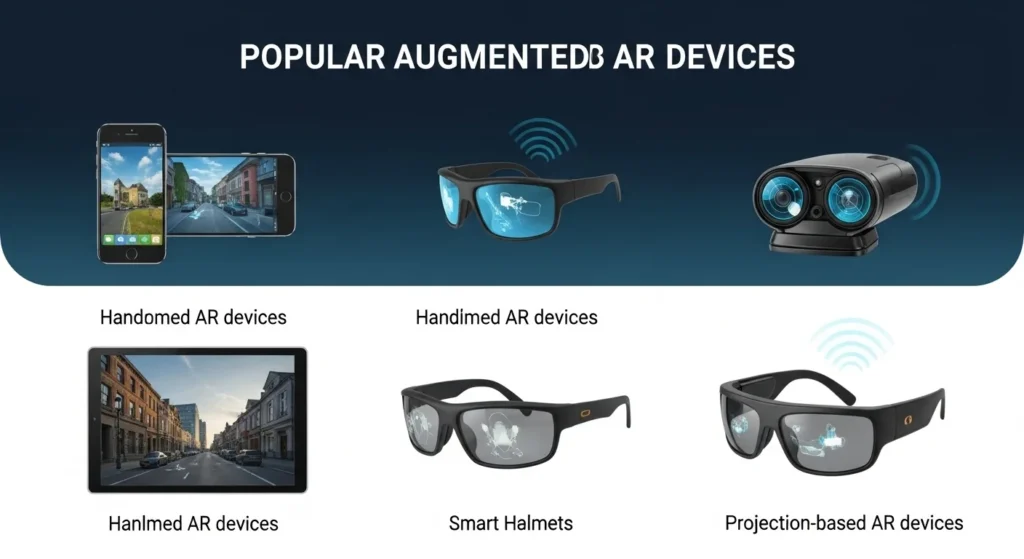
    Not all AR tools are the same. Some are worn on your face. Some sit in your pocket. Others are used in specific industries like surgery or construction.

    Here’s a quick comparison to help you understand the different types available today:

    FeatureOption / TypeDescription
    Form FactorSmart GlassesWearable frames that overlay digital content onto your real-world view
    PortabilitySmartphone-Based ARUses your phone’s camera and screen to display AR content on the go
    Professional UseHeadsets (like HoloLens)Advanced devices used in business, medicine, and engineering fields
    EntertainmentAR Gaming DevicesDesigned specifically for interactive games that blend with real spaces
    Retail & ShoppingAR Mirrors & KiosksFixed screens that let you “try on” clothes or products without touching them

    Each type serves a different purpose. Some are built for fun. Others are built for serious work. Knowing the difference helps you understand where this technology actually fits in your life.

    The Benefits of AR

    AR is more than just fun – it’s useful. Surgeons use AR overlays to provide an extra view of where they’re operating. That’s potentially life-saving technology.

    In classrooms, AR provides more visual and interactive learning experiences. Kids can learn about the human heart by interacting with 3D model rather than a 2D picture in a textbook.

    For general users, AR is used for navigating, designing and decorating, translation, and even personal training. And new applications are being developed every month.

    The Most Common AR Mistakes

    It’s important not to get carried away. AR is cool but it’s not perfect. Wearables don’t yet have long battery life. Processing power matters too.

    Don’t neglect privacy. A lot of AR devices feature cameras. Be sure to read the privacy notices and understand what data is collected.

    People also purchase expensive AR devices without knowing what they would use it for. Decide what you want to achieve, then look for the tool to do this.

    Tips from the AR Experts

    Before the hardware, the software. Learning about AR apps will help you get the most from your AR devices.

    Keep your space in mind. It’s best to use AR in good lighting conditions. Dark spaces are confusing and dim your view.

    Keep devices up-to-date. AR technology is quickly evolving. The improvements can resolve issues and enhance functionality in ways that improve the experience.

    Frequently Asked Questions

    Q: Is it safe to use augmented reality devices?
    Yes, they’re safe. But it’s a good idea to take breaks, particularly with headsets, so as not to risk discomfort or eye strain.

    Q: How much do AR devices cost?
    If you have a smart phone then AR apps are free. Standalone AR devices cost between $200 to several thousand dollars.

    Q: Will AR come to take over my phone?
    Maybe, but not any time soon. At this point, AR is more an extension of – not a replacement for – your phone. It’s still in its infancy.

    Conclusion

    It’s all still very new. Augmented reality technology isn’t 100% yet, but it’s rapidly improving. It’s being used to save lives, to virtually place a couch in your living room to check if it will fit, and more. What is futuristic is increasingly becoming mainstream. If you haven’t tried AR yet, now is the time to get your feet wet and see what you can accomplish. Things aren’t changing as quickly as we might have thought, but they are changing.

  • Future Gadgets 2030 – What to Expect in Tech World

    Future Gadgets 2030 – What to Expect in Tech World

    Introduction

    Future Gadgets 2030 – What to Expect in Tech World, Technology moves fast. Science fiction 10 years ago is now becoming mainstream and sitting in our back pockets or on our wrists. But what will the future bring in 2030? The future gadgets 2030 is set to be an exciting time. The next generation of gadgets will be smart, healthy and connected, and will help you live a simpler and healthier life. This article explains what you can expect – no spin, just the facts about the technology we’ll have in 2030 and how it could make an impact on your life.

    What’s Changing in 2030

    Technology has been making consistent but astounding advances. Year after year, our devices are getting smaller, faster and more efficient. Artificial intelligence is no longer a theoretical concept, but an integral part of search engines, appliances and more.

    By 2030, it is expected most devices will have AI. Your mobile phone will not only understand what you say, but anticipate your needs. Monocles could take the place of monitors. Perhaps robots will do your housework – completely on their own.

    The change is also taking place with battery technology. Improved batteries, solar power and wireless power transfer are all in the works today. We may not have to charge our devices as frequently in 2030.

    Future Gadgets 2030 – A Quick Overview of What’s Coming

    Here’s a simple comparison of some of the most talked-about tech categories expected to grow significantly by 2030:

    FeatureOption / TypeDescription
    Health MonitoringWearable BiosensorsTracks blood pressure, glucose levels, and heart rate in real time
    Smart Home ControlAI-Powered HubsManages lighting, security, and appliances through voice or gesture
    Personal TransportElectric Micro-VehiclesCompact, self-balancing scooters and pods for short-distance travel
    CommunicationHolographic DisplaysProjects 3D images for calls and media without a physical screen
    Learning ToolsAR Smart GlassesOverlays digital information onto the real world for hands-free learning

    These aren’t just ideas on paper. Many are already in early stages of development or testing. By 2030, some of them could become as common as smartphones are today.

    Here’s How to be Prepared for the Change

    There’s no need to be a tech whiz to get ready. There are a couple of easy things you can do.

    First, be tech-savvy. The more adept you are with apps, cloud computing and simple AI tools now, the less you’ll be worried when new technologies come along. Get used to interacting with devices and apps like Alexa and Google Home, and smart tools like Microsoft OneNote.

    Stay up-to-date with tech news. The Verge, Wired and MIT Technology Review are great sites for tech news with minimal spin. You can stay up-to-date with just a single article per week.

    Don’t impulses buy. Hold out for the second or third itteration. The initial versions tend to have problems and to be expensive. This will save you time and money.

    Advantages of Adopting New Technology

    Advantages of Adopting New Technology

    Knowing about new technology and how to use it has its benefits. You may receive discounts, help and training before other users.

    For instance, health-tech devices can help detect problems in your health. Devices that track your vital signs may pick up something your doctor wouldn’t notice until an office visit. An early diagnosis can be a life-saver.

    Artificial intelligence-powered productivity tools can help save time every week. Improved productivity tools can mean more time, less anxiety and more opportunity for creativity in work and personal time.

    Here are some mistakes people make with new technology

    A major one is getting caught up in the hype of the latest product and not considering if it’s right for you. New isn’t necessarily better.

    Don’t overlook privacy settings. Smart devices collect a lot of data. Be sure to read what data an app or device is collecting and change your settings.

    Others don’t update their devices. Installs generally contain security fixes. Not doing so can leave your devices open to attack. Be sure to keep things up-to-date.

    Tips from Experts to Make the Most of Future Tech

    Tips from Experts to Make the Most of Future Tech

    Many tech commentators have this advice: live life, don’t acquire devices. Think about whether a device really simplifies or enhances an activity. If not, it mightn’t be worth it.

    It’s good to think about the future, too. It’s better to get a device that will last for three-to-five years, rather than a cutting-edge device that will be obsolete in a year. Seek out companies that provide longer software service.

    And seek out communities. Social media and local tech groups are a good source of information from users, rather than marketers.

    Questions about Future Gadgets

    Q1: Will new gadgets be cheap for consumers?
    Yes, over time. New technologies are typically expensive at first, then cost much less as they are mass produced. This is a common pattern, such as with cellphones.

    Q2: Will smart health wearables be accurate?
    Year to year they’re improving. They’re not substitutes for doctor’s orders, but many can pick up clues and anomalies to talk to a doctor about.

    Q3: What will AI do for our devices?
    AI will make our gadgets smarter and smarter. You can expect devices that will anticipate what you want and adapt to your needs.

    Conclusion

    The future of gadgets 2030 is just around the corner. Others have already begun to develop many of the technologies mentioned here in their labs and startups. Being inquisitive, knowledgeable and discerning are the answers. You don’t have to own it, but you do need to know about it and why it’s important. From health and wellness to smart homes and smart tools, the future of the next ten years has the potential to make life better, in practical ways. Be prepared, be informed.