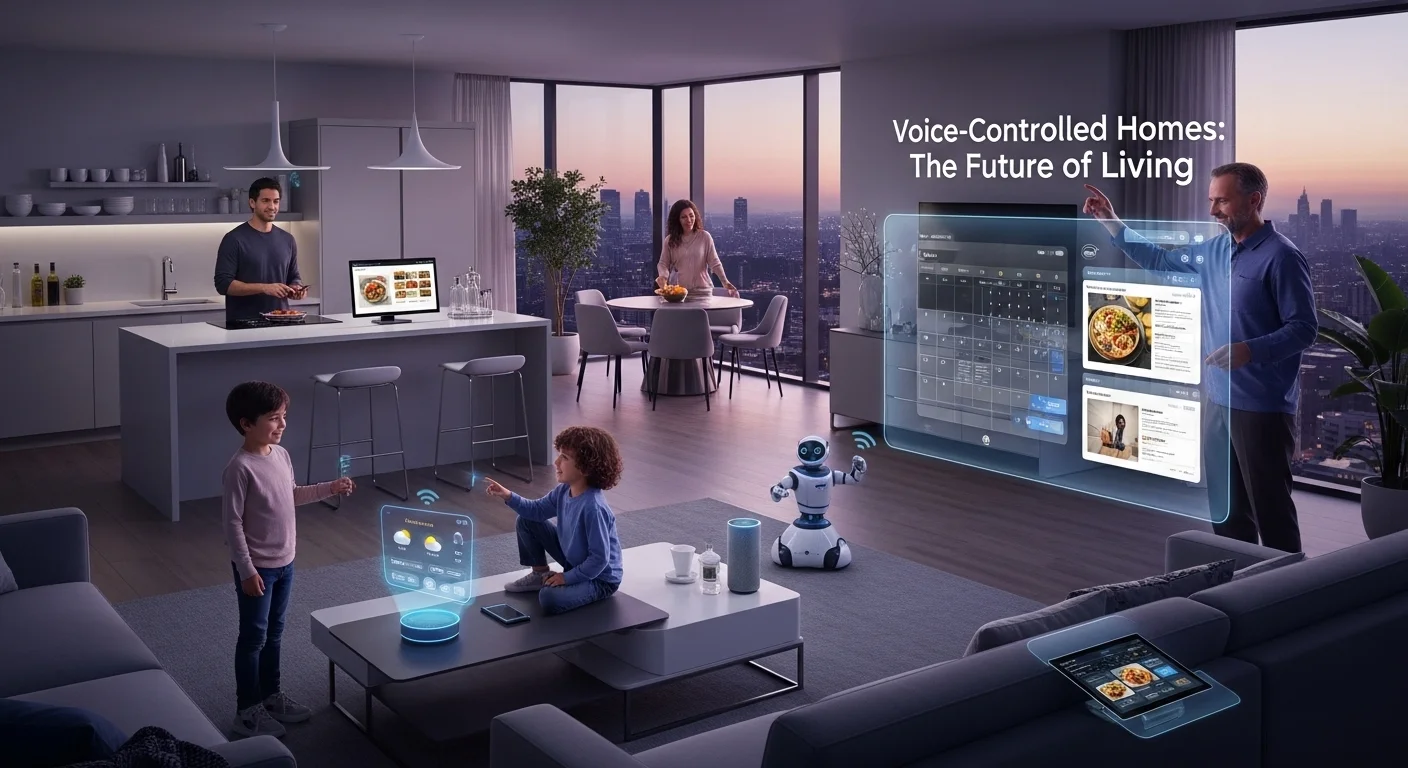
Voice-Controlled Homes – Future of Living Explained, I have a memory of a couple of years ago. I was over at a friend’s place in Austin when he recently moved into his new apartment and without pressing any buttons, he turned down the lights, turned on some music, locked the front door and told his kitchen to turn the oven on, all while he was sitting on the couch and telling me about his fantasy football picks. I’d seen it written about but I’d never experienced it first-hand. It was clear to me the future was here, but it wasn’t making a lot of noise.
Smart homes with voice control are not just the plaything of Silicon Valley anymore. They’re increasingly becoming an integral part of our lives. And the rate of development of these technologies is astonishing.
What’s a Voice-Controlled Home?
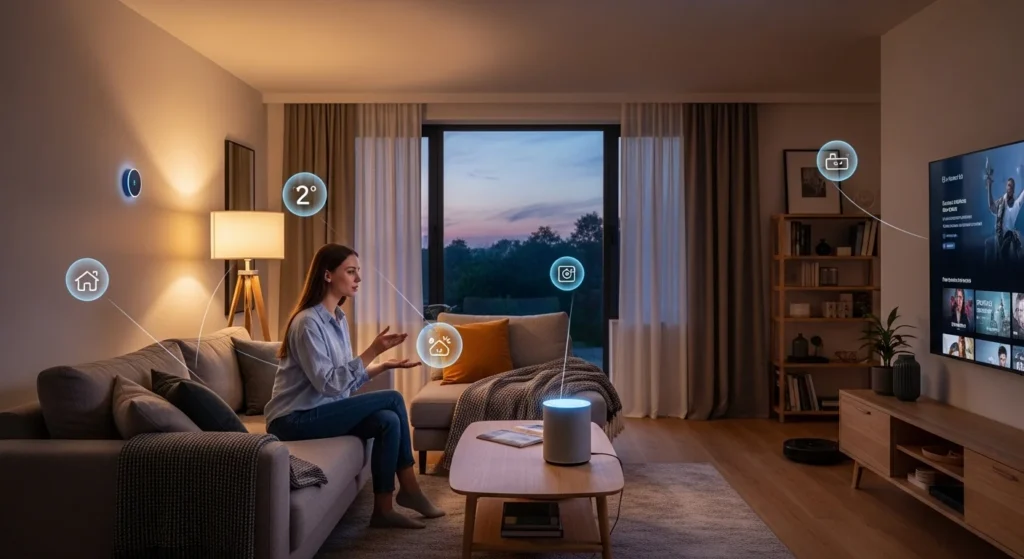
Put simply, a “smart” home uses voice-activated technology and smart devices to enable homeowners to control their home using voice commands. A smart thermostat, lights, locks, appliances, audio/visual entertainment, security cameras and even blinds – all controlled by your voice.
The system is usually based on a voice platform such as Amazon Alexa, Google Assistant or Apple Siri (via HomeKit). These assistants are the command centres, linking up scores or hundreds of devices to create an intelligent system.
What’s different with today’s voice homes is they’re smarter – through context. Early voice systems were inflexible – you had to use the precise wording. Modern technology can deal with natural language. You can ask the system to “warm up the bedroom a bit” and it knows what you want, where it’s located and how much warmer it needs to be.
How NLP is Making this Possible
Natural Language Processing (NLP) enables devices to understand natural language, rather than specific commands. So you can ask your assistant follow-up questions, rather than having to issue separate commands.
Machine learning enables these devices to learn about you to provide a personalised experience. For instance, Alexa gets to know your habits. If you ask for the news at 7 AM and then switch on the coffee maker, it’ll begin to predict this pattern and can carry out this routine automatically.
Smart home protocols (such as Matter, a new, universal one backed by Apple, Google, Amazon and Samsung) address the early smart home fragmentation issue. Different vendors’ devices used to have a hard time getting along.
What Can You Control?
- Lighting: Schedule, dim and change the colour of lights, turn on “movie night” mode or “morning wake up”
- Climate: Smart thermostats such as Nest or Ecobee that can understand natural language and some that automatically learn your behaviour
- Security: Lock/unlock doors, view security cameras, receive notifications, even talk to the front door to visitors – without lifting a finger
- Media: Play a particular song, select TV channels and start streaming videos
- Appliances: The latest appliances such as ovens, refrigerators, dishwashers and washing machines have voice control
- Energy: Track energy usage, schedule appliances to operate during times of lowest energy use, decrease power use when away
For those with mobility impairments and disabilities, this kind of control is not only cool, it’s a game changer. Smart homes are one of the biggest innovations in home design for people with disabilities in the past 20 years.
This is More than a Gimmick

Energy savings are real. Smart lights and heating/cooling systems save energy. The American Council for an Energy-Efficient Economy observed users of smart thermostats saved 8-15% on their heating and cooling costs. With lights automatically switching off when rooms aren’t in use and the HVAC system catering to your needs, it adds up.
Security improves meaningfully. Not having to get up to see who’s at the door from your bedroom, locking a forgotten door or being alerted when someone or something is lurking outside in the middle of the night provides comfort. I know a number of people who have caught porches pirates on camera thanks to these.
What to Consider & Carefully Consider
- There’s the privacy concern. These devices are continually listening for their wake word, which results in audio being constantly recorded. Although manufacturers claim that few recordings are made and they’re deidentified, there have been instances of unintentional recordings being saved. If you’re concerned about privacy, be aware of the different policies before subscribing.
- Not everything is reliable. Lack of connectivity can render devices inoperative. Software upgrades can not play nicely with other devices. There’s nothing worse than having smart lights that fail to come on when you’re hosting a dinner party.
- Security vulnerabilities exist. IoT devices can be used as a gateway to your network. Hacking is possible if passwords or firmware aren’t up-to-date. Cybersecurity best practices – unique and strong passwords, keep devices up-to-date, separate IoT networks – are very important.
The Future of Where it’s All Going

It’s all about more seamless integration. We are heading towards ambient computing where the computer will respond to you and your needs without you telling it to. You’ll have the lights, temperature and music you want as you walk into a room, without having to ask.
Multimodal interfaces will be voice, gesture and visual. Voice will still be the main mode of interaction, but will be complemented by other modes of interaction.
FAQ
Q: Do smart home voice devices need to be connected to the internet?
The devices can work without the internet, but with limited features.
Q: What’s the best voice assistant?
Amazon Alexa has the largest number of devices at the moment, but Google Assistant and Apple HomeKit are a good choice if you have devices from those manufacturers.
Q: Is voice-controlled home safe from cyber attacks?
They aren’t completely secure. Strong passwords, two factor authentication and keeping software up to date is important to minimising risk.
Q: Is it possible for renters to have voice-activated homes?
Absolutely. There are numerous smart devices that don’t need to be installed and can be taken with you.
Q: How much does voice-activated home control cost?
The cost to set up a basic smart home with a smart speaker, smart bulbs and a smart plug could be as little as $150. Whole home systems vary greatly in price, but are generally $1,000-$5,000+.
Leave a Reply