Category: AI Gadgets

  • AI Gadgets Under $100 Worth Buying: Real Picks That Actually Deliver

    AI Gadgets Under $100 Worth Buying: Real Picks That Actually Deliver

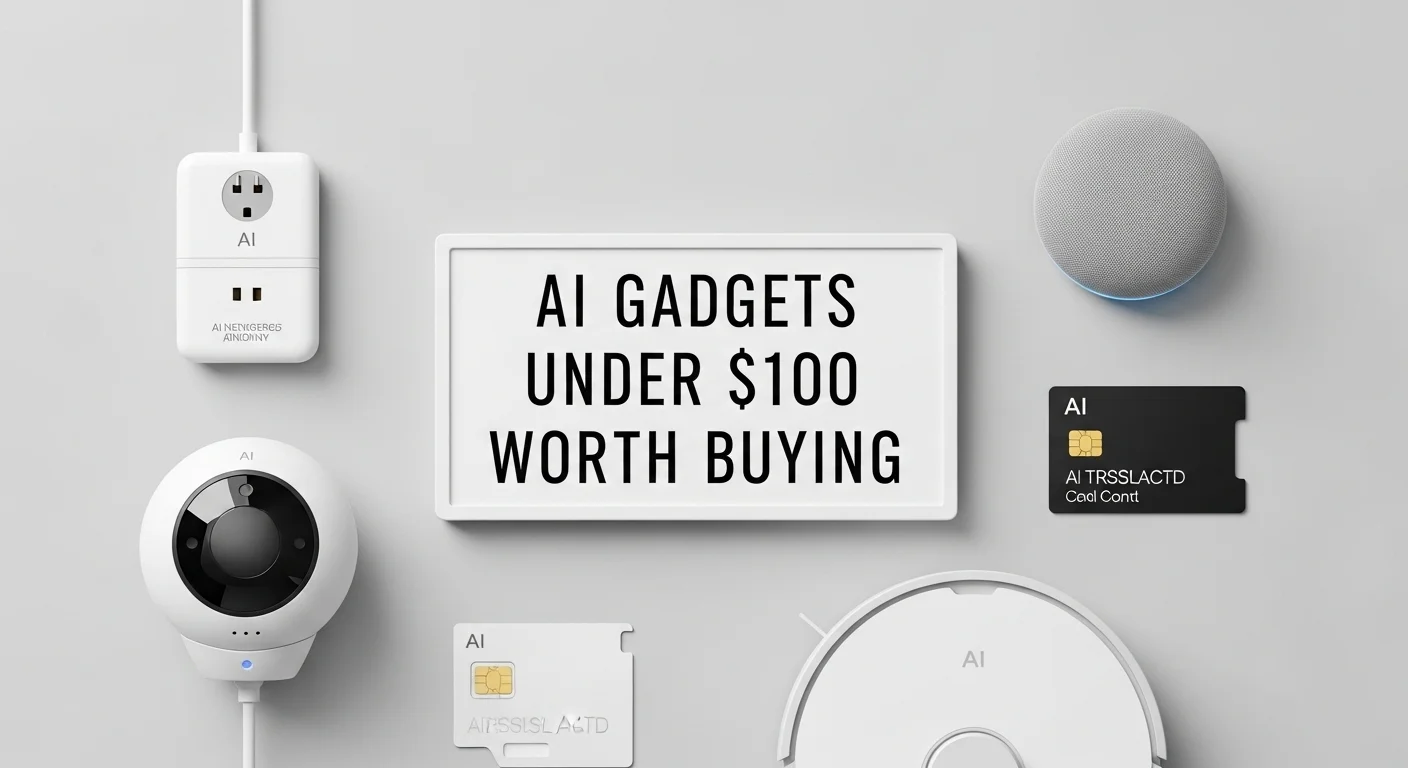
    AI Gadgets Under $100 Worth Buying, Admittedly, the market of AI devices is hyped. Half the products affix AI-powered on the box and leave it at that, hoping that the buzzword does the rest of the selling. There are some real life helpful, intelligent little things, though, that won’t cost you a fortune. I have spent a considerable amount of time testing, comparing and even returning gadgets in this area and what follows is a well-grounded review of which ones are really worth the money.

    The reason why the Sub-$100 AI Gadget Space is surprisingly good now.
    In the past couple of years, anything that had the ability of real AI was priced higher. The processing capacity that was needed, the sensors, the software licensing – all would quickly get expensive. That’s changed. The price of chips has fallen, cloud-based AI processing is more affordable and manufacturers are at least partially transferring that to customers. You do not have to spend 300 to get a product that will really make your life better.

    With that said, there are trade-offs in budget gadgets. Battery life, construction quality, accuracy in responses – they are different. I will deal honestly with you here, as to what each device does well, and where it cuts corners.

    Amazon Echo Dot (5th Gen) — Approximately 50.

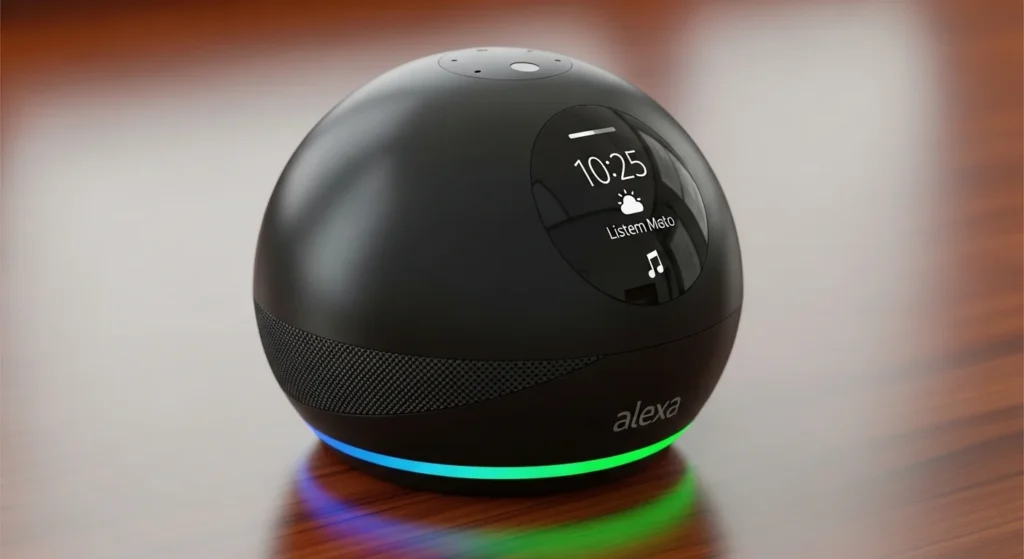
    To this day, one of the most popular entrances to AI-assisted living. Alexa has become more mature when incorporated into the Echo Dot. It is no longer about playing music and setting timers but is capable of controlling smart home routines, responding to relatively complicated queries and integrating with hundreds of third-party apps.

    The 5th generation is better than the previous one in the quality of sound and the temperature sensor that enables the device to start automations depending on the room conditions. Minor gimmick, but actually helpful, should you be constructing any sort of smart home.

    The limitation? Alexa still lags behind the competition in terms of conversational ability. It manages commands fine, but subtle back and forth dialogues might be feeled as stilted. At $50, however, the ecosystem value on its own is worth the purchase.

    Google Nest Mini – Approximately $35 (frequently on sale)
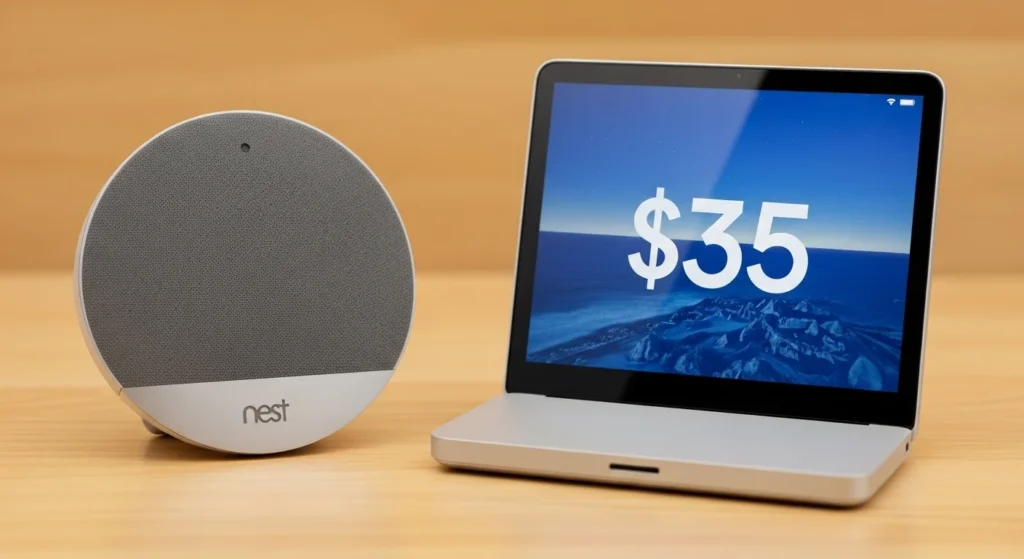
    This one should not be ignored since it is not new. The integration of the AI assistants used by Google is one of the most acute in terms of natural language understanding. Give it a conversational question and it tends to pursue the thread more than most of the rivals at this price.

    It is also a good way to start, should you be within the Google ecosystem – Calendar, Maps, Gmail integration is seamless. The Nest Mini justifies its place on a table to students or distant employees who reside in Google Workspace.

    Renpho AI Smart Scale — Approximately between 40 to 60.

    Smart scales are not new, yet the latest models offered by Renpho include a new feature trend analysis with AI-based health insights. The app does not simply provide you with a number but monitors trends over a series of weeks and notifies you of abnormal fluctuations in body composition indicators.

    It estimates the routine – BMI, body fat percentage, muscle mass, estimates of bone density. The AI layer provides context: Your muscle mass is a little less in the last three weeks, – you may think about modifying protein intake. It is not medical advice and the app makes it clear that it is not, but this is the type of prompt that leads to behavior change.

    Wyze Cam OG — Around $20–$35
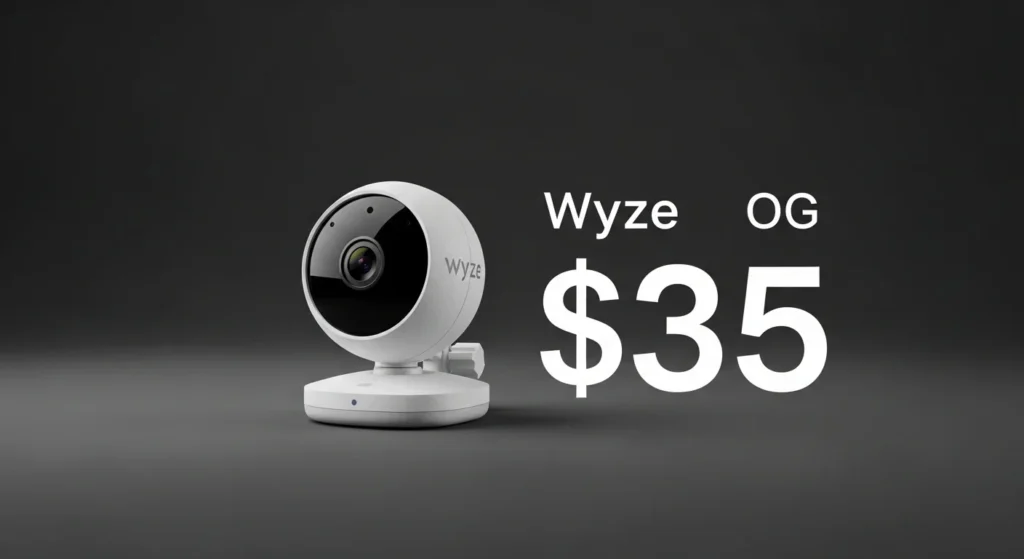
    To make a home security system affordable, Wyze has installed a ridiculously cheap camera with an impressive AI-detection system. Person detection, vehicle detection, and package detection are all on-device AI processing – no subscription necessary to get started.

    The quality of the image is good at the price. The AI notifications are fairly correct, there are false positives (a shadow moving has sounded my alarm previously), but much better than motion-only notifications which will sound every time a cloud goes by.

    To have 24/7 cloud storage, you can subscribe, but the free plan works.

    Tile Ultra (or Like Bluetooth AI Trackers) — $35 or so.

    Monitoring gadgets have become intelligent. The Tile Ultra is based on the larger community network to update location, and the app currently takes advantage of AI to find out where you misplace most often and remind you before you leave something. It sounds small. It really saves time.

    The rival is Apple AirTag, however, it is Apple-only. Tile works are cross-platform, and it is important to many households.

    What to be wary of.

    Subscription traps. A lot of low-end AI devices present as being low-cost initially, and then charge you a fee every month to access the features which were actually advertised. Always read the small print prior to purchase.

    Overblown AI claims. When the product description sounds more of a science fiction pitch than a spec sheet, then slack down. True AI performance at this price level is practical but not impressive – it is not magic.

    Privacy considerations. Your home is infiltrated with microphones, cameras and health sensors gathering data. Read the privacy policy of the manufacturer. Keep with those brands with transparent data handling policies and a history of transparency.

    Final Thought

    There is no need to empty your pockets to make some truly smart technology a part of your daily routine. The above devices are more than mere affordable prices. The trick lies in being able to relate the gadget to a practical need you have and not purchasing an item because AI sounds fancy on the bottle. Begin with small ones and then experiment with what suits you and then expand.

    FAQs

    Q: Are AI devices less than 100 dollars valuable or a sham?
    Some of them are truly practical, as the smart speakers, AI cameras, and health trackers at this cost have actual and practical features that justify the investment.

    Q: Are AI budget gadgets subscribable?
    Others do in the case of advanced features. Always have a look before purchasing – most have good free levels.

    Q: Which one is more appropriate to start with Echo Dot or Google Nest Mini?
    Google Nest Mini works more with conversational queries; Echo Dot is superior in the scope of the smart home. Select depending on the services you are currently using.

    Q: Are AI devices privacy safe?
    Well-known companies, such as Amazon, Google, and Wyze, have privacy policies, yet never leave settings without review and turn off the features you feel uncomfortable about.

    Q: What is the most affordable AI device to use at home (less than 100)?
    Wyze Cam OG has a great level of AI detection capabilities with an unbeatable price.
  • Best AI Voice Assistants Compared (2026 Guide)

    Best AI Voice Assistants Compared (2026 Guide)

    Best AI Voice Assistants Compared (2026 Guide), Voice assistants are no longer seen as witchcraft as it used to be when one asked Siri to set a timer. Now these systems are integrated into all things, your car, your kitchen appliances, your earbuds, your TV remote. But nowadays, with a variety of different options vying to grab your attention (and your data) it is no longer as straightforward to pick the correct one as it was before.

    I have been trying voice assistants on various devices and in various situations over years and in 2026, the situation is really going to be different as compared to just two years back. In this case, the following is what I have discovered.

    The reason why voice assistants will be even more important in 2026.

    Best AI Voice Assistants Compared (2026 Guide)

    The move to ambient computing, in which technology reacts to you, as opposed to you reacting to it, by speaking without having to touch a screen, has made voice assistants a cool feature to be a useful tool. The disabled use them in their day-to-day activities. They are used by busy parents to control houses. They are used by the professionals to compose the messages without using their hands. The stakes in the achievement of this are more than ever before.

    All assistants are not created equal. There are those that are more adept at smart home control. Some are witty at natural talk or industry. We shall dissect them in good faith.

    Google Assistant (Now Gemini-Powered)

    The voice assistant of Google has been creeping to become the most able everyday assistant of the majority of people, in part due to the means of its incorporation into the language model underpinning Gemini. The contextual knowledge has enhanced tremendously. It can ask follow-up questions without rephrasing and can partially deal with multi-part and complex queries with remarkable precision.

    Leads where it can: Search queries, integration with Google Workspace, control over Android devices, management of smart homes via Google Home, and real-time translation.

    Where it falls short: Privacy is a valid issue – Google makes its business based on data, and this is not going to change. Secondly, replies are at times too careful or hedged in cases where you desire a straight answer.

    Best: Android users, Google loyalists, or any other person who spends more time in Google Calendar, Gmail, or Google Maps.

    Amazon Alexa (2026 Edition)

    Over the last two years, Alexa has experienced some internal upheaval at Amazon, but the 2026 version, which is powered by a much more modernized large language model, is more conversational than previous versions. The new Alexa is less robotic and is more helpful with ambiguous requests.

    Smart home control is what Alexa continues to excel over others. Alexa is the most compatible device with a wide range of devices of various brands and protocols. It works with Matter, Zigbee, Z-Wave and pretty much everything.

    What it does best: Smart home automation, shopping, third-party skills ecosystem, Echo product family.

    Where it fails: Even general knowledge questions might feel shallow as compared to Gemini or ChatGPT based assistants. And the push towards Amazon shopping can be oppressive.

    Best use case: Smart home lovers, Amazon Prime users, and people with numerous devices in their IoT ecosystem.

    Apple Siri (Advanced to Apple Intelligence)

    Siri has long been the whipping boy of the voice assistant industry, and in a way, some of such accusations were justified. However, in 2026 when Apple Intelligence is implemented on all devices, Siri is actually competitive.

    On-device processing is the most significant improvement. Siri is more responsive locally, so it has quicker responses and is more private. It is so deeply built into iOS, macOS, and watchOS, that Android-based assistants can never imitate it – reading your emails in context, knowing what actions an app can do, and managing your health data.

    Strengths: Privacy-first design, Apple ecosystem integration, Automation in Shortcuts, Accessibility features.

    Where it blunders: Retards yet in freely flowing conversation. Cross-platform compatibility is really non-existent, unless you go all the way with Apple, this is not of use to you.

    Best: iPhone and Mac users concerned with privacy, Apple Watch users, anyone who is immersed in the Apple ecosystem.

    Microsoft Copilot Voice

    Microsoft has been highly penetrative with enterprise users with Copilot, and the voice-enabled one has become truly practical in productivity situations. It works with Microsoft 365, Teams, and Windows 11 in a manner that does not seem gimmick.

    Strengths: Document writing, meeting notes, integration with Teams, control of windows devices.

    Where it falters: The experience facing consumers remains to be polished on its edges. It is obviously designed to be used by office workers, rather than to control your smart lights or listen to music.

    Best suited: Enterprise users, Microsoft 365 subscribers, remote workers.

    Samsung Bixby

    To tell the truth, Bixby has never been a top-dog, and nothing has changed that significantly. But it is enhanced in a significant way by Samsung on Galaxy devices. Its advantage lies in the profound hardware integration; Bixby is capable of controlling device-level options, camera, and Samsung appliances, something other assistants are unable to touch.

    Best to use: Hardcore Samsung users and desire maximum control over their devices.

    Final Thoughts

    In 2026, there is no best voice assistant, it really depends on your ecosystem, and what you need most of all. Siri has come a long way should you consider privacy to be your number one priority. Alexa remains the best when it comes to the most extensive smart home integration. In general intelligence, and open-ended queries, it is difficult to match Google with its Gemini-powered assistant.

    My sincere advice: the vast majority of individuals ought to skew towards which assistant fits their main ecosystem of device. The combination and confusion is irritating, not worth the effort.

    Frequently Asked Questions

    What voice assistant will be the most private one in 2026?
    With a local processing request on the device that is powered by Apple Intelligence, Siri can process most of its requests without contacting servers.

    Will Alexa be useful in 2026?
    Yes, particularly to smart home control users and Amazon ecosystem users. There is some improvement in conversational ability.

    Is it possible to use voice assistants offline?
    Siri performs numerous offline tasks. Still others need to be connected in order to perform most functions.

    What is the most productive assistant?
    Microsoft Copilot Voice is the leader in office and enterprise productivity work.

    Is it safe to use voice assistants in children?
    The majority of them provide parental controls and kid safe modes, however, supervision and settings configuration is still a recommended thing.

  • How AI Home Devices Are Transforming Smart Living

    How AI Home Devices Are Transforming Smart Living

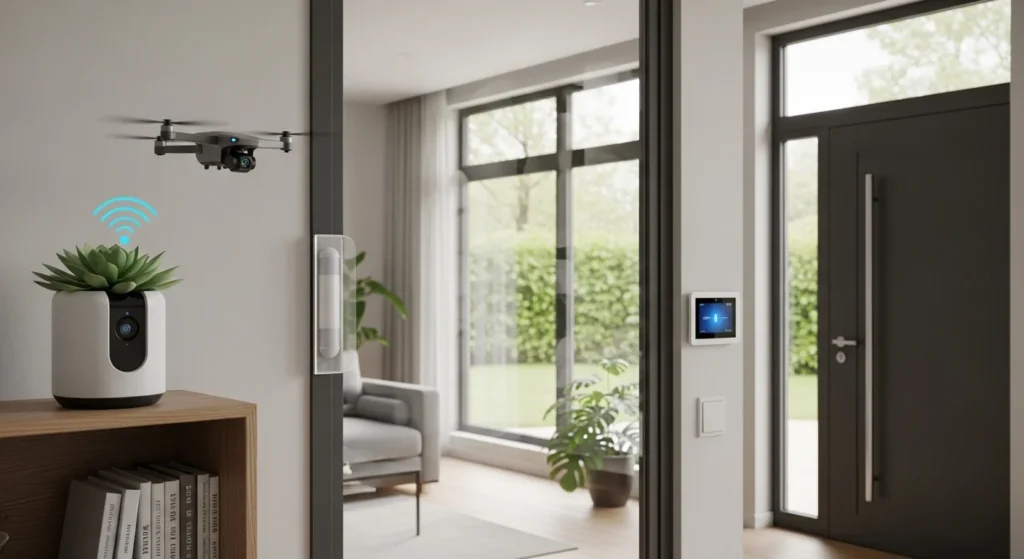
    How AI Home Devices Are Transforming Smart Living, I have a moment that I remember. One winter last winter I was visiting a friend of mine in the apartment in Seattle and I saw her walk in the front door of the apartment with a full load of grocery and say, I am home. The bulbs were turned on, the thermostat was set, soft music was turned on and her coffee maker entered the cycle. She never laid a finger on a switch. It was no magic, it was a carefully built AI-driven home ecosystem doing just what it had learned she desired after months of daily co-existence.

    The experience made me consider in detail how far we have come. No longer are we talking about programmable timers or simple remote-controlled devices. The AI household devices that are infiltrating our lives now are learning, adapting, and making decisions in a manner that would have seemed like science fiction just 10 years ago.

    What a device is considered AI-powered anyway?

    It is a question that is worth taking a moment and pondering on, as the term is thrown around carelessly. Not all smart devices are really AI-powered. An intelligent plug with which you programme a schedule via an application? That’s automation. A thermostat that can adjust to your temperature preferences during the two week learning period, identify when you are not in the house and adjusts to your needs to save energy? Machine learning powering your home.

    Real AI home devices engage a set of sensors, data processing, pattern recognition and even natural language understanding to make contextual decisions. They are not just doing what is being told to them, but they are reading situations and acting in a dynamic manner. That difference is crucial towards knowing the real difference they make.

    The Ecosystem Shift: Gadgets to Integrated Living.

    Most people would have a few years ago a collection of independent products that would hardly communicate with each other as their definition of a smart home. There is a smart bulb here and a video doorbell there. The experience was quite inconveniencing most of the time.

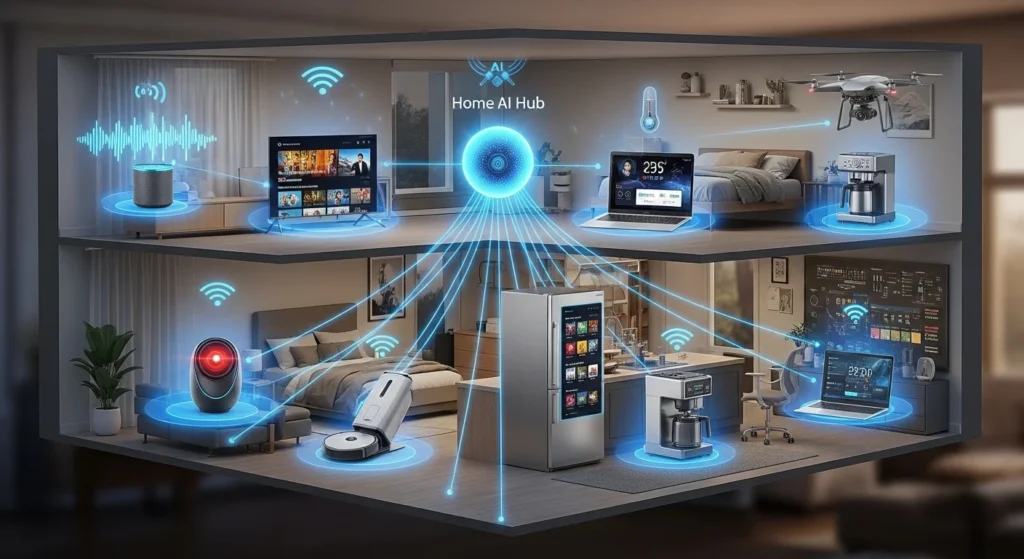
    Integration of ecosystems has changed. Services, such as Amazon Alexa, Google Home, and Apple HomeKit, have established a system in which devices speak, exchange data, and organize actions. However, more recently interoperability has been taken to the next level with the Matter standard, a universal smart home protocol, allowing devices made by one manufacturer to interact with other devices without issues.

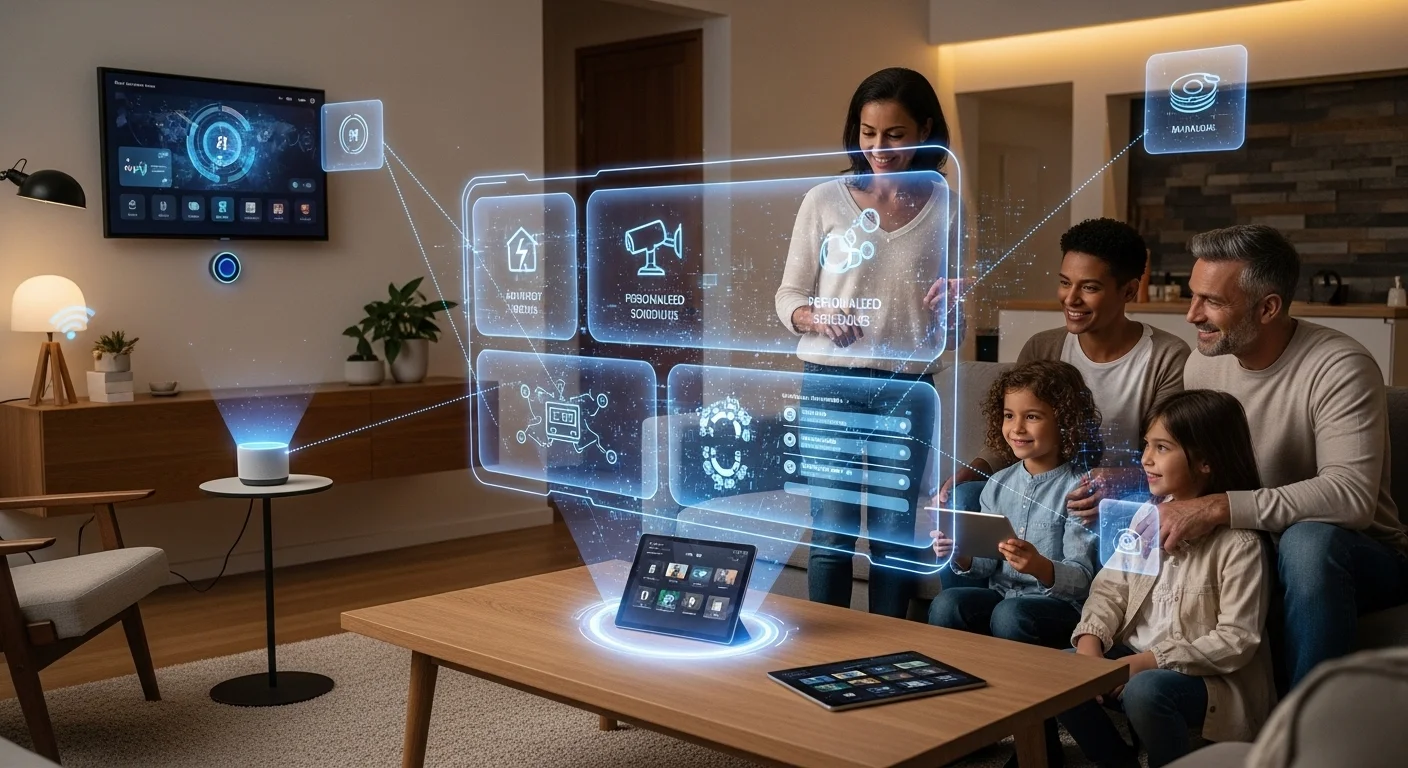
    The outcome is the creation of homes that are more of a coherent system than a set of gadgets. Your smart lock will be unlocked by your AI-powered security camera, which will recognize your face. Your smart blinds can be told by your sleep tracker to gradually open at your usual time of natural awakening.

    Smart Speakers and Voice Assistants: The Nucleus.

    Amazon Echo, Google Nest Audio and Apple HomePod are the backbrains of most smart-home configurations. However, their abilities have increased significantly. Contemporary voice assistants deal with multi-step commands, comprehend conversational context, and can integrate with thousands of third-party services.

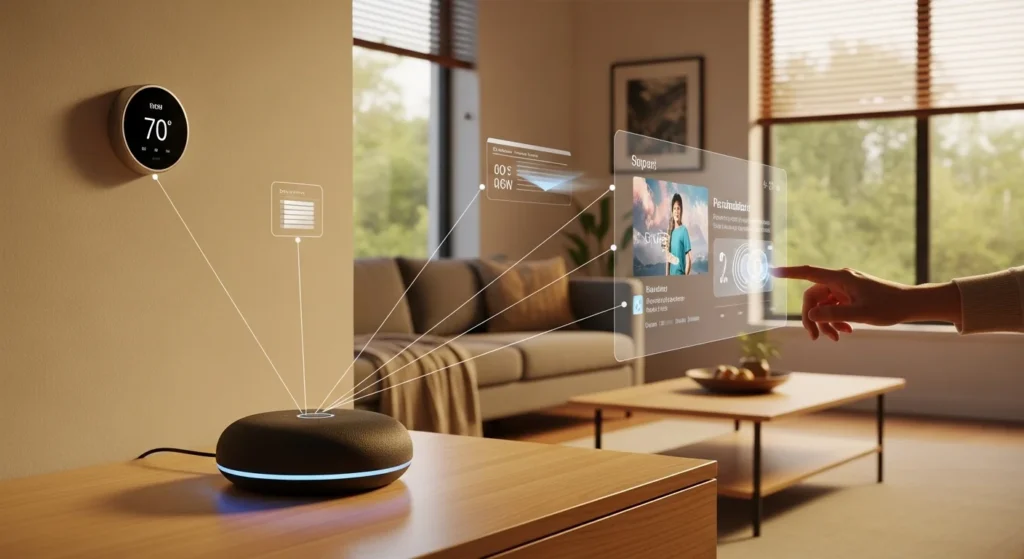
    Proactive intelligence is what is really impressive today. Newer features of assistants are predictive instead of reactive, responding to commands. The routines in Google Assistant can activate depending on your schedule, place, or time of the day without uttering anything. The hunch capability on Alexa will literally inquire whether you would like to leave a light on at 2 AM as per your previous activities.

    Climate Control Becomes Real Smart.

    Nest thermostats was perhaps the first widely-used AI home appliance to get people to pause and say, actually, this works. The new generation of smart thermostats is even more. They study the occupancy pattern, consider the local weather prediction, combine with utility pricing information, and streamline comfort and energy expenses.

    The SmartThermostat Premium by Ecobee includes room sensors to know the actual location of people within the house, heating or cooling only those areas instead of the whole house being equally cooled.

    Home Security: More intelligent and subtle.

    The initial smart security cameras would raise an alert on each moving leaf assuming that it was a possible intruder. The current AI-driven cameras of Ring, Arlo, and Google Nest are able to identify a person, a vehicle, a package, and an animal. They identify faces, note suspicious activity patterns, and deliver truly relevant alerts as opposed to an endless stream of notifications.

    Other systems have been built to work with neighborhood alert systems, and can pick up audio events, such as a breaking window, a smoke alarm, and not just visual ones. To the aging parents who are living alone or those families that have young kids this layer of intelligent monitoring will bring them some peace of mind and not just a semblance of it.

    The Kitchen and Beyond.

    Refrigerators with an expiry date sensor. Smart ovens which identify which food you have put in it and recommend cooking conditions. Vacuum robots that map your house, memorize the layout of your furniture and avoid collisions. They are no longer niche luxury products, but are becoming more and more mainstream.

    The Boundaries that we should recognize concerning Privacy, Ethics and the Limits.

    This change does not come without justifiable fears. All of the AI home appliances are, in essence, a data collection device. The better your home knows you, the more information they have about your daily routines, likes and habits. Who owns that data? How is it stored? Can it be sold or subpoenaed?

    These are not crazy questions. Some of the largest

    manufacturers have been questioned on their data-sharing. Themoral duty of consumers is to understand the privacy policies, have a strong network security, and make conscious decisions on what devices deserve to get a peek into the inner workings of your home.

    Where This Is All heading.

    The next wave is ambient intelligence -houses that listen to their surroundings without any commands or even visible apparatus. Wall, floor, and furniture sensors. Devices that can sense stress by voice tone and change lighting or music. Artificial intelligence that controls energy usage in real-time according to the demand on the grid.

    Frequently Asked Questions

    Q: Do home devices that are based on AI require the internet?
    The majority of them need internet to be fully functional but there are some basic operations that can be accomplished locally.

    Q: Do smart home devices have a hard time to install?
    Majority of the modern gadgets will be non technical and guided through apps to install.

    Q: Are home devices with AI hackable?
    Yes – tough passwords, periodic updates of the firmware and a safe router can go a long way in mitigating this risk.

    Q: Do smart home appliances save money?
    Smart lighting and thermostats will be able to provide the necessary energy savings in the long run.

    Q: What is the best platform, Alexa, Google or Apple?
    It is based on the devices and ecosystem that you already have; each of them is competent and competitive.

  • AI-Powered Smart Glasses – Features & Future

    AI-Powered Smart Glasses – Features & Future

    Sci-Fi Gadget to Everyday Wearable.

    AI-Powered Smart Glasses – Features & Future, I recall as a child seeing the early sci-fi movies, when the characters wore futuristic eyewear that could scan their surroundings, real-time language translators and overlay digital information on the real world. Fantasy at the time. It is nowadays almost Tuesday.

    AI-enabled smart glasses have unobtrusively passed the line between being a novelty and a technology that is actually useful. They are not flawless, by no means, but the trend is sharp, and the applications are growing at an exponential rate, unknown to the majority. After several years of being the closest to this space, trying all models under the sun and talking to developers as well as a regular user, I can confidently state: we are at a truly pivotal moment.

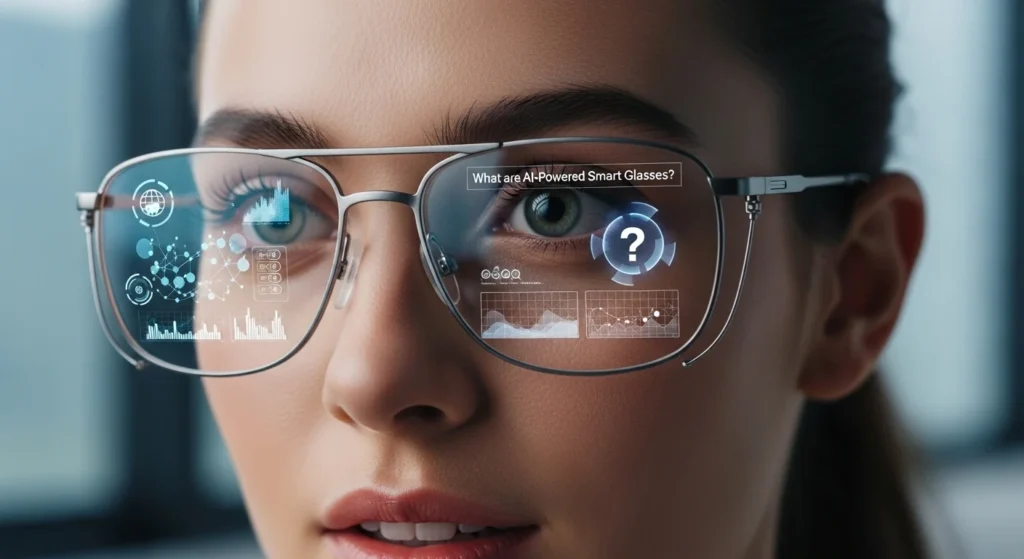
    So, What are AI-Powered Smart Glasses?

    Before going into details, it is best to lay down the fundamentals. Smart glasses are eyewear that appear (occasionally) like normal eyewear, but include cameras, microphones, speakers, sensors, and more powerful AI processors. The distinction of AI-powered is important, as this differentiates the modern ones with the older, even dumber versions which were in fact Bluetooth headsets with a display attached to it.

    The AI-based smart glasses of today are able to comprehend context. They not only take pictures but also read them. They do not hear words but comprehend language, purpose and even feeling. That is a great change.

    Real-Time Visual Processing

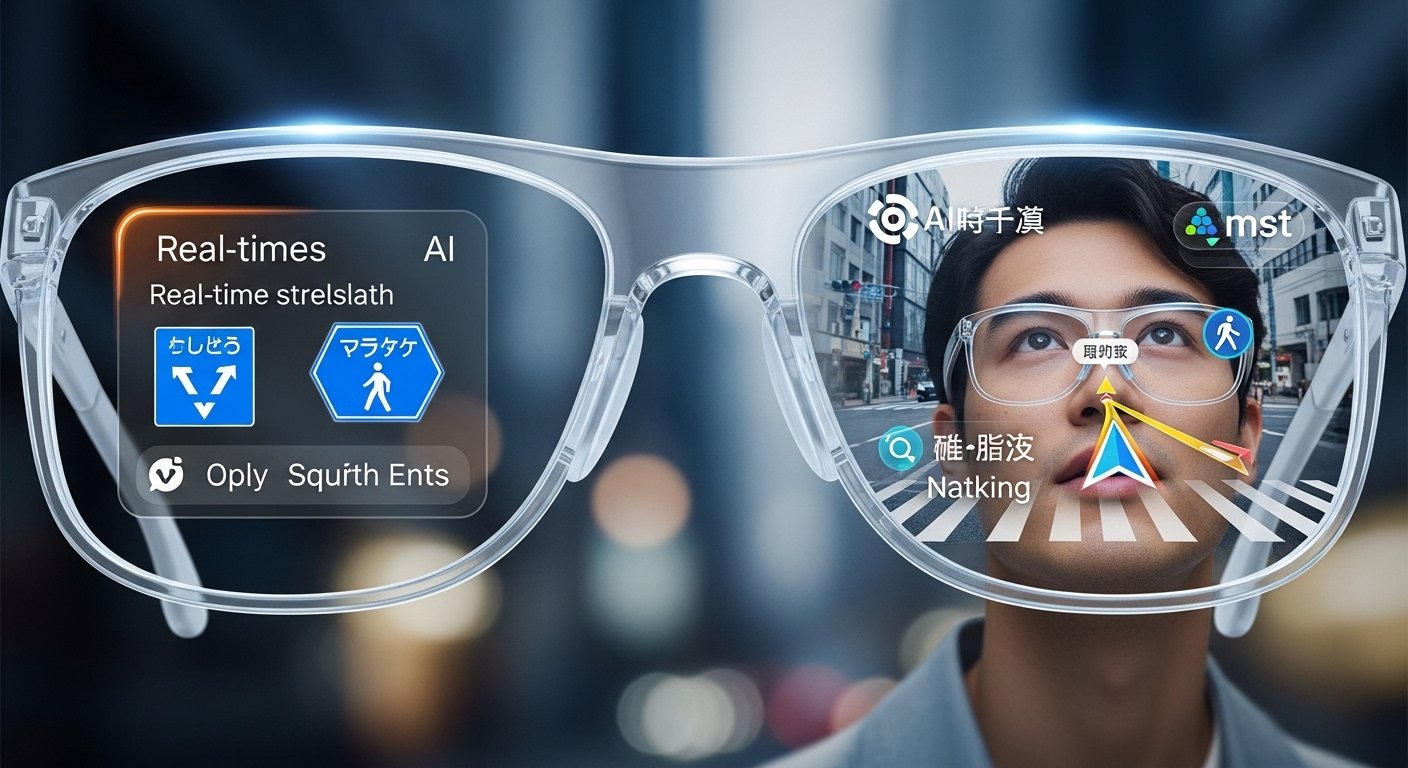
    This is probably the most amazing component. The current AI glasses with computer vision are able to recognize objects, read text, recognize faces (where legal), and even describe a whole scene to users with visual impairments.

    Take the example of a person whose vision is low crossing a street. Their AI glasses are able to describe in audio what lies in the path ahead – a red light, a pedestrian crossing, a car coming in the left. That is no trick of a party. Assistive technology that changes lives.

    Augmented Reality Overlays

    AR integration enables the superimposition of digital information on what you can view in the real world. The directions come out in the form of floating arrows in your sight. A restaurant menu appears on the screen in your language. The name of a colleague is displayed over his or her face in a conference.

    The technology remains in its infancy, with latency, battery consumption and screen brightness being issues, but firms such as Meta, Google and a number of startups are seeing actual improvement.

    Real-Time Language Translation

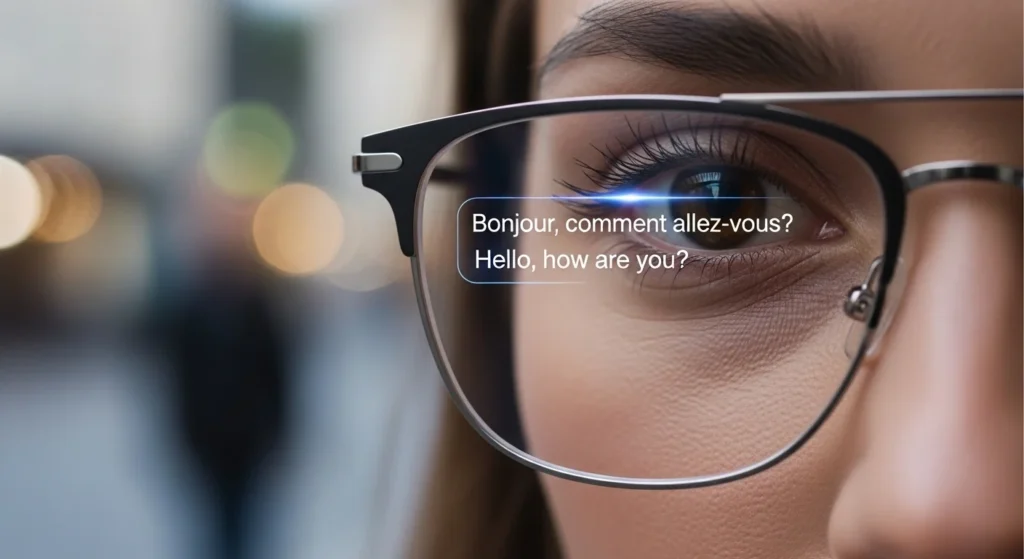
    Going to a foreign country would have entailed scrambling to find a phrasebook at some point or picking up your phone at every time. The AI smart glasses can now hear someone speaking in a foreign language and provide you with an audio reply which is translated into your ears in a few seconds. There are models which even show you a text translation in your peripheral vision.

    Hands-Free AI Assistance

    Smart glasses, which have voice-activated AI assistants, enable the user to ask questions, get reminders, send messages, or control smart home devices without the touch of a button. The dissimilarity to phone-based assistants is the immediacy, you are already wearing the device, you are free of your hands and the answer goes right into your ears.

    Health and Biometric Surveillance.

    There are more sophisticated models that are also adding sensors to monitor heart rate and eye movement, body temperature and even early signs of stress. It turns out that the eyes tell a lot about our physiological condition. The changes in pupil dilation, blink rate and gaze may reflect fatigue, cognitive load, or the initial symptom of neurological disorders.

    Navigation and Spatial Awareness 6.

    GPS glasses navigation makes the experience quite different than the one of walking with your phone in your hand and looking at it. Turn-by-turn directions are given by delivering them to the bone conduction audio – or by displaying them as faint overlays – to keep you in the world, yet get you where you need to be.

    Who is Making this Technology?

    The Ray-Ban smart glasses made by Meta have probably made the most to popularize the form factor to typical users. They are designed to look like a normal pair of sunglasses but include a camera and microphones and have an AI voice-activated feature that is not as bulky as Google Glass did a decade ago. This has been received more favorably.

    Apple, which does not reveal itself easily, is working on its vision-based wearables, and their vision of integrating health data may revolutionize the category altogether.

    The Problems Which Are Yet to be Resolved.

    The bane of all wearables is battery life. No one desires to fill up their glasses twice a day. The typical models currently available provide 4 to 8 hours of active use, which is still not much.

    Privacy is a more in-depth and complex problem. Camerawearing glasses are distinctly different than phones with cameras. Individuals agree (unconsciously at least) to be in the public but not many would imagine that the other person may be recording, identifying or even analysing them in real-time. This has brought about legitimate popular discourse and laws in various countries are yet to keep up with the technology.

    It is important whether it is socially accepted. The wearing of tech forwards eye wear is still self-conscious. The Glasshole bias of the Google Glass days has yet to be completely removed. Designers are striving to bridge the functional/fashionable gap.

    Final Thoughts

    Smart glasses powered by AI are not an established product. They are a work in progress – at times frustrating, at times magical, obviously heading somewhere transformative. The firms and scientists involved in this area are addressing really difficult challenges in optics, AI, battery technology and human-computer interaction concurrently.

    Frequently Asked Questions

    Q: Can we use AI smart glasses in everyday life?
    Yes, to the majority of the users. They have low power displays and common wireless frequencies. Nonetheless, prolonged video viewing or listening should be subjected to caution.

    Q: Are smart glasses that can replace smartphones?
    Not yet. They do not replace phones, but complete them and, in the long run, can deal with a variety of everyday interactions on their own.

    Q: What are the prices of AI-powered smart glasses?
    The starting point of other entry-level models such as Meta Ray-Ban is approximately around $300. The cost of advanced enterprise or AR models can be several thousand dollars.

    Q: Do smart glasses have privacy legislation?
    The laws are different in countries. Some jurisdictions, irrespective of the type of device used, make it illegal to record people without their consent.

    Q: What are the market leaders of the AI smart glasses?
    The key players that are currently influencing the space include Meta, Google, Vuzix, Envision and Brilliant Labs.

  • Top AI Wearables Changing Daily Life in 2026

    Top AI Wearables Changing Daily Life in 2026

    Top AI Wearables Changing Daily Life in 2026, I can recall a time I had a vivid experience in this regard, at the hospital waiting room, when a man, who looked old, took a look at his smartwatch, and without much ado, informed his daughter that his heart rate was irregular, and I believe we should report it to the nurse. It was not a film scene. It was the year before and I still remembered this, as he had a device on his wrist that had the potential to save his life that afternoon.

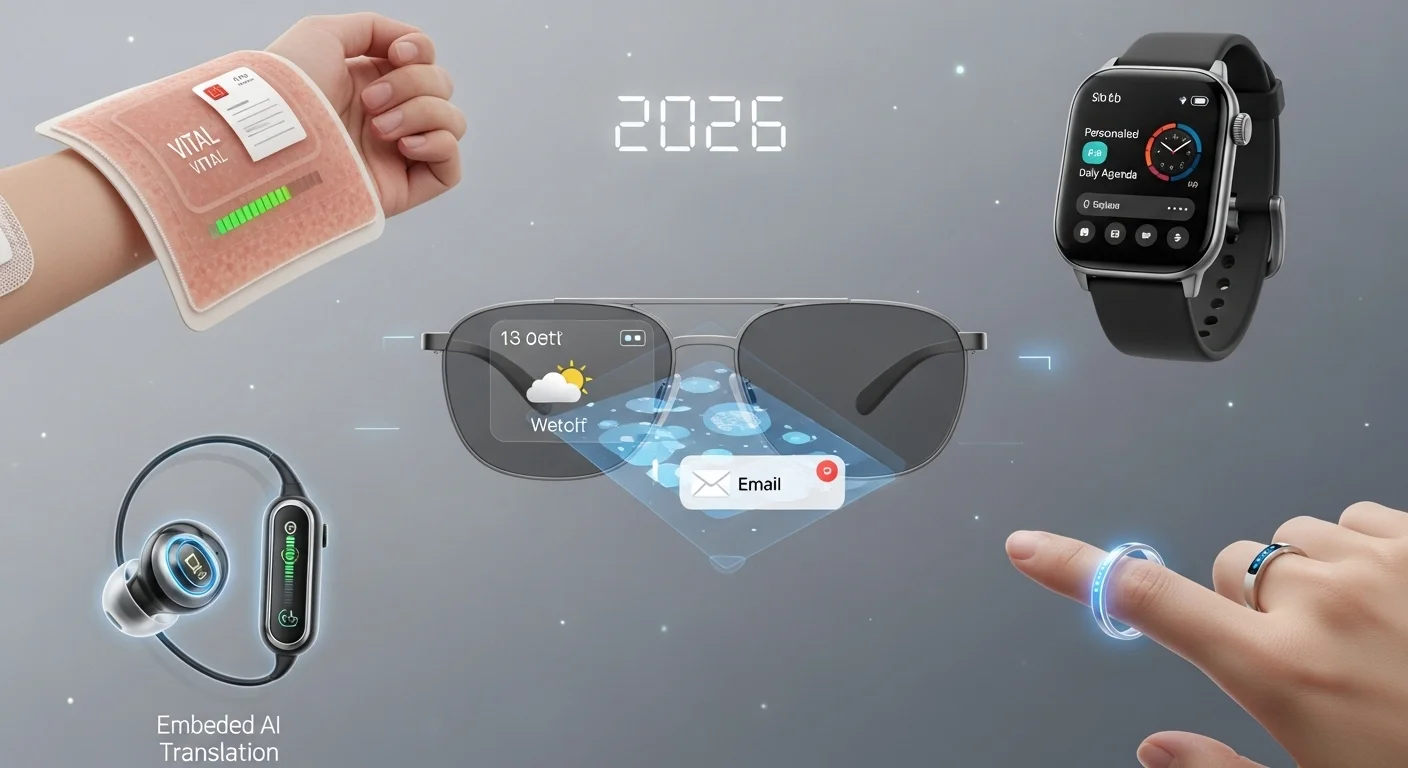
    AI wearables are far beyond the era of the fitness tracker. We are talking about the devices which know your body, see what is going to happen to it, adapt to your mood, and become an inseparable part of your working, movement, and even sleep. The market has been on a boom – worth more than 180 billion worldwide – and the gadgets that propel that figure are truly amazing.

    Intelligent Rings: Silent Machines.

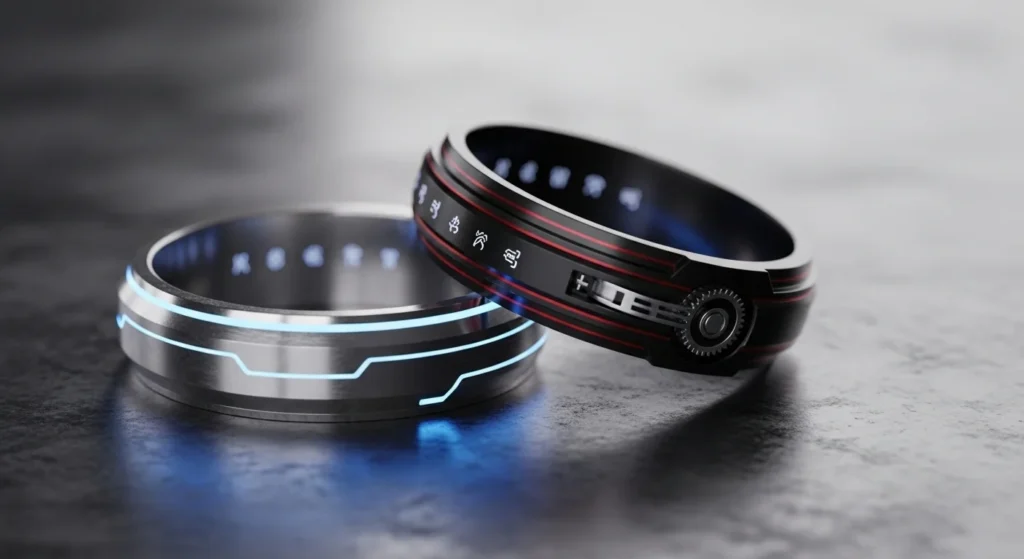
    The Oura Ring Gen 4 and its rivals, the Samsung Galaxy Ring being the most notable one, have transformed the capabilities of a so-called passive wearable. These are not the step counters. The newest generation rings have photoplethysmography sensors and on-device AI models to track your sleep architecture, body temperature variations, HRV (heart rate variability), and even the first indicators of an illness (not even feeling ill yet).

    What makes 2026’s rings different from even two years ago is the personalization layer. Rather than matching your data to population averages, these devices develop a baseline specific to you in 30-60 days, and then alert you when it deviates and that is significant to your body in particular. The average heart rate of 58 could be normal to you but a cause of alarm to another person. The ring is aware of the difference.

    Practical application? The biggest beneficiaries are shift workers, heavy training block athletes, and new parents. One of my friends is a coach of collegiate swimmers and he informed me that his swimmers began maximizing recovery based on ring data instead of perceived effort and the injury rate in his group was significantly reduced within a single season.

    Artificial Intelligence-powered Hearing Aid and Earbud.

    This type does not have sufficient coverage, and, frankly, it is a pity. The Starkey Genesis AI and Jabra Enhance Select 300 have made it difficult to distinguish between medical hearing aid devices and those aimed at improving conventional hearing.

    The AI that occurs within these earbuds is amazing. They are able to single out a voice in a busy restaurant, they are able to reduce the volume of wind noises dynamically, and on the example of the flagship of the Starkey, they can translate the speech in nearly real-time. To the one point five billion humans on planet earth with some level of hearing impairment, it is life changing technology and not a device.

    However, even in the case of normal hearing, AI earbuds will be used in 2026 as cognitive aids. Others have real-time meeting transcription, sentiment analysis on the fly in a conversation (scandalous, yet, handy in a sales and negotiation setting), and a dynamic noise management in a situation, where profiles are automatically switched when you leave a gym and enter an office.

    Next-Gen Smartwatches: Health Trackers and Notification Centers.

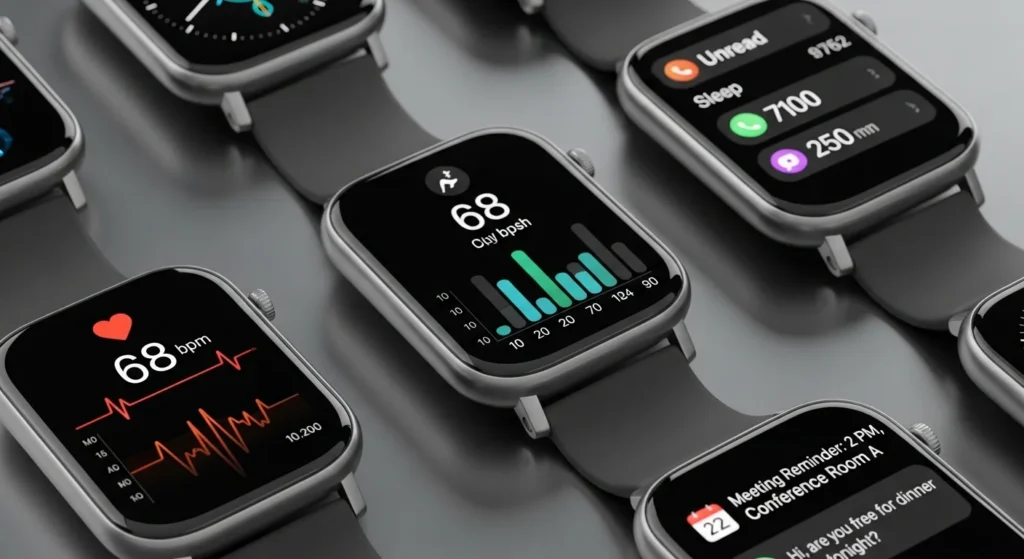
    Apple Watch Series 11 and the Samsung Galaxy Watch 8 Ultra provide a considerable improvement over their predecessors, yet so do newcomers on the scene, such as Garmin and Withings. Continuous, clinical-grade health monitoring is the distinguishing characteristic of the best smartwatches of 2026.

    Blood glucose monitoring that does not involve finger pricks – not only sought after in the industry over ten years – is at last available to consumers, but performance is inconsistent across brands. The ECG functions, blood oxygen and atrial fibrillation detection algorithms are more reliable and have been FDA approved. The cardiologists are going to a great extent of urging the high-risk patients to wear them in between appointments.

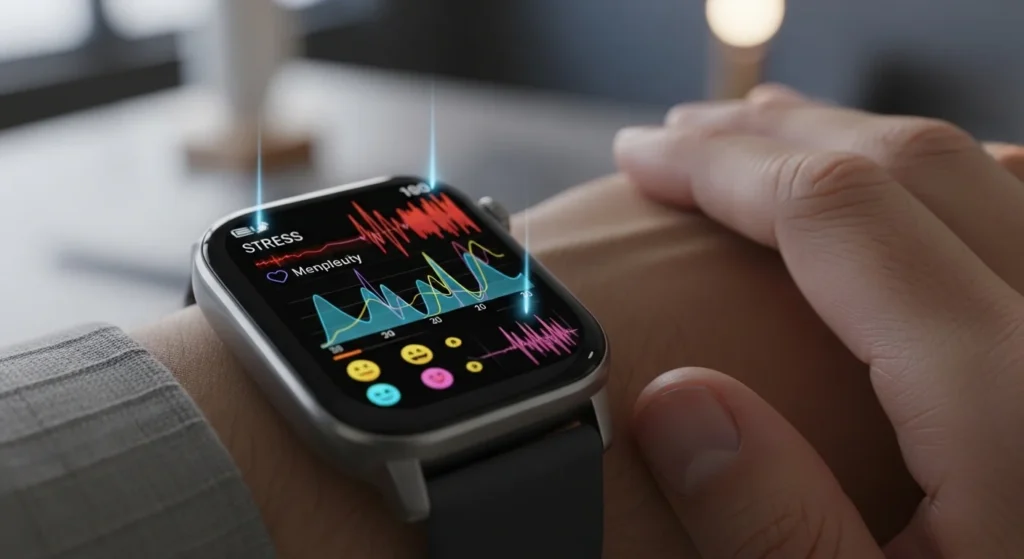
    Integration of mental health is a relatively new field. Multiple watch applications have stress scoring systems which are based on HRV, skin conductance and behavioral patterns. When your stress indicators soar regularly on Sunday evenings, your watch not only alarms but also proposes breathing patterns.

    AI Glasses: Not So Awkward anymore.

    Remember Google Glass? The smart glasses were plagued by the specter of that failure that lasted a decade. The third generation of Meta Ray-Ban Smart Glasses, as well as the competition of such companies as Brilliant Labs has finally discovered what people really want in eyewear.

    The wisdom was in subtly. No one desires to have a screen attached to his face. It is the contextual information that is presented in a natural manner that people desire. The current AI glasses have a bone conduction audio and a small display layer that provides you with navigation, reminders, translating in real-time, and environmental consciousness without having to look like you are in an audition to play a role in a sci-fi movie.

    Smartwatch Biosensors to monitor Mental and Emotional health.

    The emergence of wearables with a mental health focus, perhaps the most silently important of 2026, is perhaps the most impactful. The Apollo Neuro wristband and other devices are being used as a nervous system stimulator that utilizes vibration to stimulate the nervous system to move between focus, calm, and sleep readiness states, which has been demonstrated through peer-reviewed research studies.

    The Caveats of a Few Honest Folks.

    All this is not flawless. Privacy could be a significant issue – the information that wearables gather about health is incredibly sensitive, and the rules governing data use differ excessively from company to company. Most types of batteries continue to frustrate their users. And there is the actual threat of health anxiety as individuals are focused on every measure.

    Final Thought

    AI wearable in 2026 is not a science fiction. They’re morning routines. They are why some of us had irregular heartbeats at least in the early days, or why some of us were able to sleep well after months of insomnia, or why some of us could finally figure out why we were always tired on Thursday. The technology has come of age to receive real trust – and that is saying something.

    Frequently Asked Questions

    Q: Can AI wearables be relied upon to make health decisions?
    A number of them are FDA-authorized to be used with certain measurements such as ECG and AFib detection, although the results should be always verified by a medical professional.

    Q: What is the most appropriate AI wearable to track sleep in 2026?
    Oura Ring Gen 4 and Whoop 5.0 are considered to be the most detailed sleep trackers nowadays.

    P: Do AI wearables not need a smartphone?
    The vast majority of them need a paired smartphone to be fully functional, but such standalone functions as heart monitoring can operate without a smartphone.

    Q: Are wearable health data confidential?
    Policies are different by brand. Check the privacy policies of the brands and select ones that have transparent data ownership policies.

    Q: Does AI wearable assist in mental health?
    The use of devices such as Apollo Neuro is promising as an adjunct tool, but should not substitute professional mental health care.

  • Best AI Gadgets in 2026 – Smart Devices You Must Try

    Best AI Gadgets in 2026 – Smart Devices You Must Try

    Best AI Gadgets in 2026, Technology is changing at a rapid pace, but 2026 seems to be the year that everything actually fell into place. After years of AI remaining this abstract, and behind the scenes, driving recommendation algorithms and spam filters, it is finally making its way into our physical world in a way that you can feel, wear, and even count on. I have spent a fair part of the last year trying out technology, visiting the technology shows, and interviewing the average user, not the very first to adopt technology, but a whole new breed of user and what I am observing is a change. These are not new products any more. They’re useful.

    Smart Glasses: Translate in Real-Time with AI-Powered Smart Glasses.

    Do you recall smart glasses being primarily a joke? Google Glass is lingering in the memory. However, the 20252026 generation of AI glasses; by companies such as Ray-Ban Meta and newer entrants such as Brilliant Labs; have become a somewhat secretive trend where people wear them in public without shame.

    The most impressive one is the real-time language translation, which is provided with bone conduction audio this year. You are facing someone speaking Mandarin or Portuguese and in one or two seconds, you hear a soft voice in your ear informing you of the translation. No cell phone, no stilted moments. I tried this during an international trade show, and had a 20 minutes conversation with a Korean manufacturer without either of us drawing out a phone.

    AI Health Monitors that are beyond Fitness Tracking.

    The market of the fitness trackers became uninterested quickly. The number of steps and heart rate charts ceased to impress anyone in 2021 or so. However, 2026 health wearables are not only doing something fundamentally different but also predictive health analysis.

    Smartwatches such as the Samsung Galaxy Ring, and newcomers at Withings are currently applying on-device AI to track early signs of atrial fibrillation, irregular cortisol rhythms associated with burnout, and even early sleep apnea – without a prescription device or a doctor appointment.

    The context-awareness is what makes such gadgets truly exciting. One of the users that I interviewed, a 44 year old teacher, actually reported that her ring warned her of irregular heart patterns three days prior to her having what was to be a minor cardiac event. Her cardiologist assured her that the device had in effect snared something that they would not have otherwise spotted.

    Ambient Intelligence AI Home Hubs.

    Smart speakers are not new, yet the 2026 AI home hubs are a whole new ball game. The Amazon Echo Hub and Google Nest with Gemini integration is no longer simply responding to commands – it foresees the trends.

    There is no need to turn off the lights and turn the thermostat down at 10 PM but the system will know it. In case you are going to be late according to your calendar, the morning routine will automatically change. It may seem insignificant, but in reality, life with a real ambient AI home assistant will transform your day-to-day rhythm in a way that would be difficult to describe unless you have tried it.

    The issue of privacy remains valid and should be raised. These devices are listening at all times – it is encoded in the operation of the device. All people purchasing this ecosystem must go over the data-sharing policies and be aware of what is being saved and where.

    AI Writing/reading devices (E-Ink Meets Intelligence)

    This was a surprise to me. The Remarkable 3, and Boox Go are devices that have incorporated AI to the extent that they can be considered relatively powerful productivity tools, as opposed to fancy notepads.

    The AI interface is now able to summarize handwritten notes in real-time, turn scribbles at a meeting into formal documents and even cross-reference your notes with imported PDFs. To writers, researchers, academics and anyone who still thinks better with a pen in hand, these devices are a transitional device between the analog and digital worlds that laptops never quite attained.

    AI-powered Earbuds That Can Have Conversational Awareness.

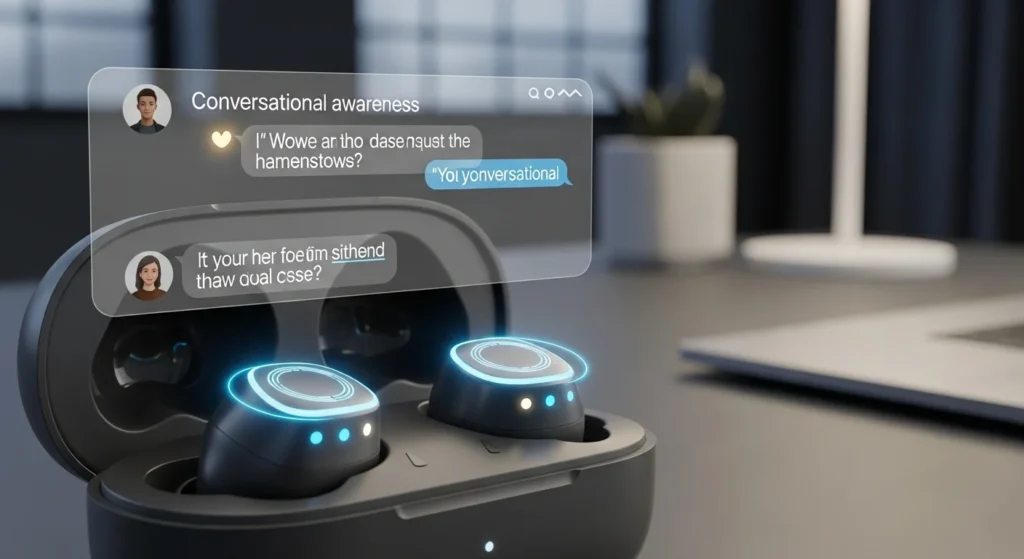
    The more recent WF series of Apple AirPods Pro and Sony have brought the adaptive audio to a new level, which borderlines on uncannyness. They have now the ability to differentiate between a conversation that you are involved in and background noise which you would prefer to be filtered, automatically switching between the two options without you having to touch anything.

    Better still is the health integration – the newest AirPods Pro are able to monitor changes in hearing health over time, virtually acting as a baseline audiological monitor. Combine that with the real-time translation (a feature gradually being introduced to premium earbuds) and you have a device gradually becoming one of the most useful devices you have.

    Home AI Robots (Yes, Really)

    This would have been very ludicrous just three years ago, yet home robots are experiencing a real moment. The third generation of Amazon’s Astro and more recent competitors such as Ecovacs and Samsung Ballie project are now taking floor cleaning to actual assistance of the home.

    They are able to watch on their aged family members, open the door with visual surroundings and coordinate across multiple rooms in a way that does not make them feel gimmicky. They are costly: the majority of them cost between 1000-2500 and they are not universal. The use case is real but in the context of families with ageing parents or with accessibility needs.

    Final Thoughts

    The thing that 2026 has made obvious is that AI devices are as good as they are incorporated into your real life. The top devices in this list are not showcased, due to spec sheets, but they get quietly improved into your life and are made to be better. That is what technology always aspired to, and we are living portions of that.

    Buy thoughtfully. Review the privacy policies. And do not have the hype run away with the utility.

    FAQs

    Q: What will be the most helpful AI device in 2026?
    A: The most useful health wearable and smart earbuds among the majority of users are AI.

    Q: Is the use of AI devices safe?
    A: Yes, usually, however, it is always advisable to check the privacy settings and data policies before buying.

    Q: Are AI robots of the home worth the cash?
    A: Yes, when there are special requirements such as the elderly or assistance to access. They are yet to mature to be used in general.

    Q: Can AI smart glasses be used in translation?
    A: Performs well in quiet-moderate conditions impressively; accuracy may decrease in noisy conditions.

    Q: What do I need to consider the most when purchasing an AI device?
    A: Utility in the real world, privacy settings, battery duration and software durability.