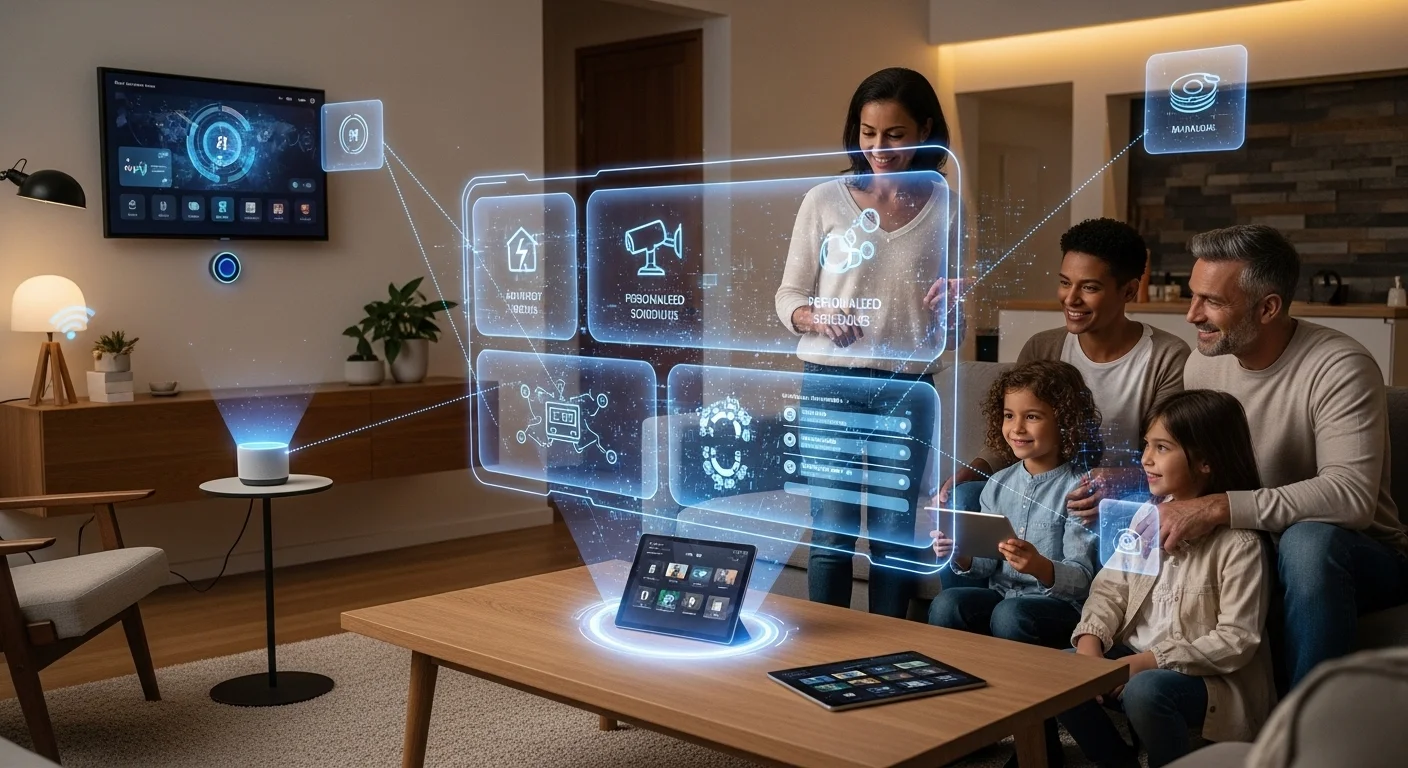
How AI Home Devices Are Transforming Smart Living, I have a moment that I remember. One winter last winter I was visiting a friend of mine in the apartment in Seattle and I saw her walk in the front door of the apartment with a full load of grocery and say, I am home. The bulbs were turned on, the thermostat was set, soft music was turned on and her coffee maker entered the cycle. She never laid a finger on a switch. It was no magic, it was a carefully built AI-driven home ecosystem doing just what it had learned she desired after months of daily co-existence.
The experience made me consider in detail how far we have come. No longer are we talking about programmable timers or simple remote-controlled devices. The AI household devices that are infiltrating our lives now are learning, adapting, and making decisions in a manner that would have seemed like science fiction just 10 years ago.
What a device is considered AI-powered anyway?
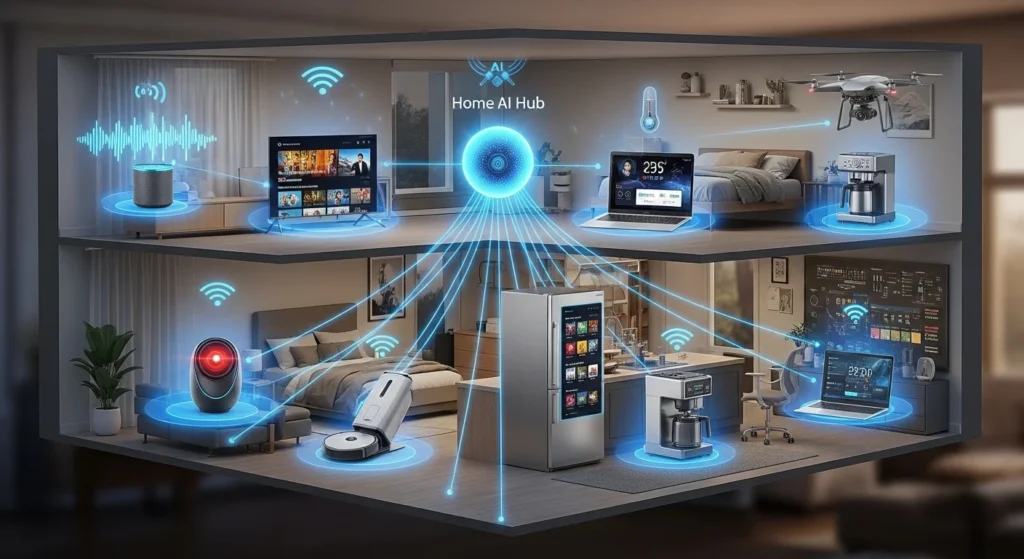
It is a question that is worth taking a moment and pondering on, as the term is thrown around carelessly. Not all smart devices are really AI-powered. An intelligent plug with which you programme a schedule via an application? That’s automation. A thermostat that can adjust to your temperature preferences during the two week learning period, identify when you are not in the house and adjusts to your needs to save energy? Machine learning powering your home.
Real AI home devices engage a set of sensors, data processing, pattern recognition and even natural language understanding to make contextual decisions. They are not just doing what is being told to them, but they are reading situations and acting in a dynamic manner. That difference is crucial towards knowing the real difference they make.
The Ecosystem Shift: Gadgets to Integrated Living.
Most people would have a few years ago a collection of independent products that would hardly communicate with each other as their definition of a smart home. There is a smart bulb here and a video doorbell there. The experience was quite inconveniencing most of the time.
Integration of ecosystems has changed. Services, such as Amazon Alexa, Google Home, and Apple HomeKit, have established a system in which devices speak, exchange data, and organize actions. However, more recently interoperability has been taken to the next level with the Matter standard, a universal smart home protocol, allowing devices made by one manufacturer to interact with other devices without issues.
The outcome is the creation of homes that are more of a coherent system than a set of gadgets. Your smart lock will be unlocked by your AI-powered security camera, which will recognize your face. Your smart blinds can be told by your sleep tracker to gradually open at your usual time of natural awakening.
Smart Speakers and Voice Assistants: The Nucleus.
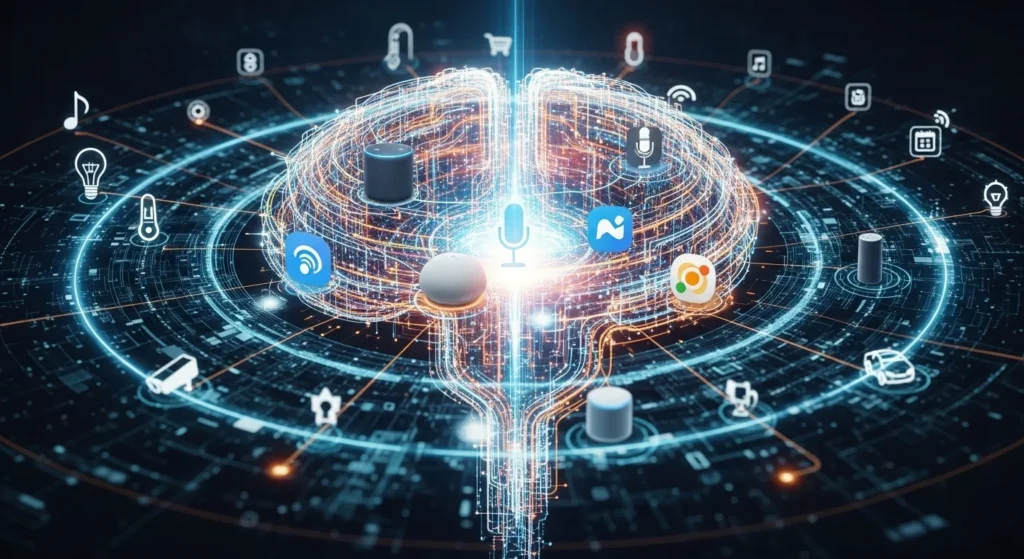
Amazon Echo, Google Nest Audio and Apple HomePod are the backbrains of most smart-home configurations. However, their abilities have increased significantly. Contemporary voice assistants deal with multi-step commands, comprehend conversational context, and can integrate with thousands of third-party services.
Proactive intelligence is what is really impressive today. Newer features of assistants are predictive instead of reactive, responding to commands. The routines in Google Assistant can activate depending on your schedule, place, or time of the day without uttering anything. The hunch capability on Alexa will literally inquire whether you would like to leave a light on at 2 AM as per your previous activities.
Climate Control Becomes Real Smart.
Nest thermostats was perhaps the first widely-used AI home appliance to get people to pause and say, actually, this works. The new generation of smart thermostats is even more. They study the occupancy pattern, consider the local weather prediction, combine with utility pricing information, and streamline comfort and energy expenses.
The SmartThermostat Premium by Ecobee includes room sensors to know the actual location of people within the house, heating or cooling only those areas instead of the whole house being equally cooled.
Home Security: More intelligent and subtle.
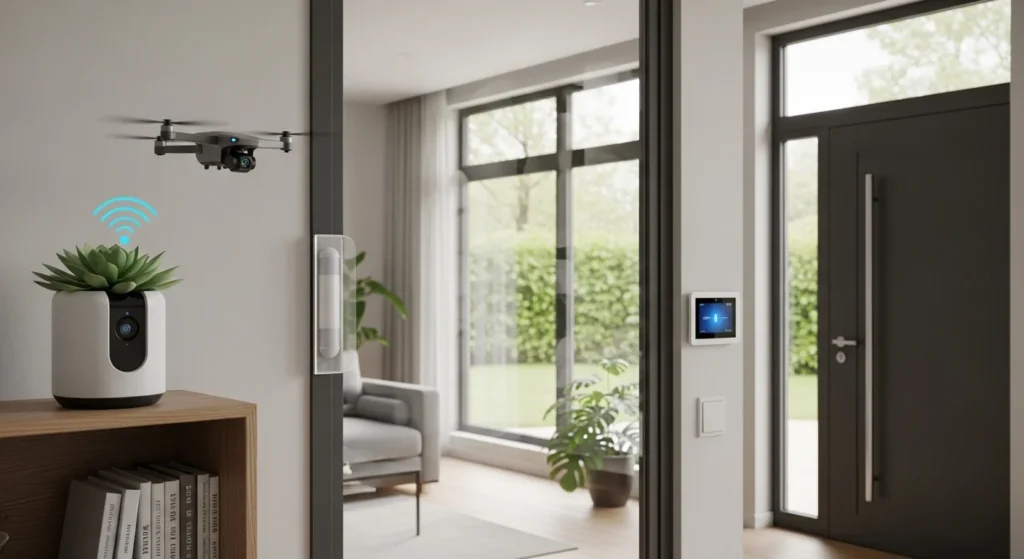
The initial smart security cameras would raise an alert on each moving leaf assuming that it was a possible intruder. The current AI-driven cameras of Ring, Arlo, and Google Nest are able to identify a person, a vehicle, a package, and an animal. They identify faces, note suspicious activity patterns, and deliver truly relevant alerts as opposed to an endless stream of notifications.
Other systems have been built to work with neighborhood alert systems, and can pick up audio events, such as a breaking window, a smoke alarm, and not just visual ones. To the aging parents who are living alone or those families that have young kids this layer of intelligent monitoring will bring them some peace of mind and not just a semblance of it.
The Kitchen and Beyond.
Refrigerators with an expiry date sensor. Smart ovens which identify which food you have put in it and recommend cooking conditions. Vacuum robots that map your house, memorize the layout of your furniture and avoid collisions. They are no longer niche luxury products, but are becoming more and more mainstream.
The Boundaries that we should recognize concerning Privacy, Ethics and the Limits.
This change does not come without justifiable fears. All of the AI home appliances are, in essence, a data collection device. The better your home knows you, the more information they have about your daily routines, likes and habits. Who owns that data? How is it stored? Can it be sold or subpoenaed?
These are not crazy questions. Some of the largest
manufacturers have been questioned on their data-sharing. Themoral duty of consumers is to understand the privacy policies, have a strong network security, and make conscious decisions on what devices deserve to get a peek into the inner workings of your home.
Where This Is All heading.
The next wave is ambient intelligence -houses that listen to their surroundings without any commands or even visible apparatus. Wall, floor, and furniture sensors. Devices that can sense stress by voice tone and change lighting or music. Artificial intelligence that controls energy usage in real-time according to the demand on the grid.
Frequently Asked Questions
Q: Do home devices that are based on AI require the internet?
The majority of them need internet to be fully functional but there are some basic operations that can be accomplished locally.
Q: Do smart home devices have a hard time to install?
Majority of the modern gadgets will be non technical and guided through apps to install.
Q: Are home devices with AI hackable?
Yes – tough passwords, periodic updates of the firmware and a safe router can go a long way in mitigating this risk.
Q: Do smart home appliances save money?
Smart lighting and thermostats will be able to provide the necessary energy savings in the long run.
Q: What is the best platform, Alexa, Google or Apple?
It is based on the devices and ecosystem that you already have; each of them is competent and competitive.
Leave a Reply