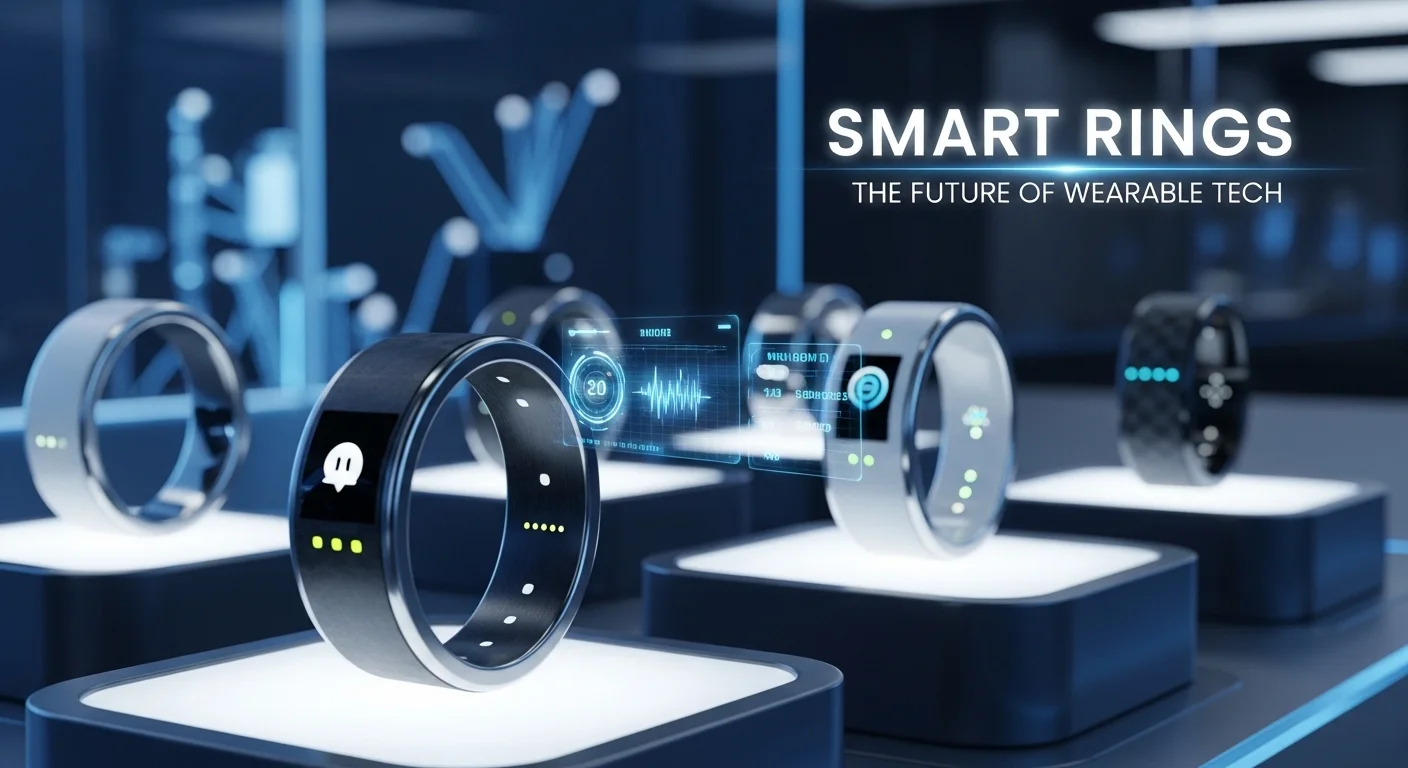
Smart Rings – The Future of Wearable Tech, It’s poetic in a sense to think about wearing your health information on a ring. For centuries, rings have been a symbol of love, status and identity. But now they’re tracking your heart rate, sleep patterns and levels of stress as well. Smart rings are increasingly becoming an exciting piece of wearable technology, and they’re getting overlooked.
I’ve been tracking the wearable market for a while now, and the move to wearables in the form of a ring feels inevitable. Because we all don’t want to wear smartwatches. Some want something discreet, something that isn’t shunned at dinner parties or an interview.
What’s a Smart Ring?
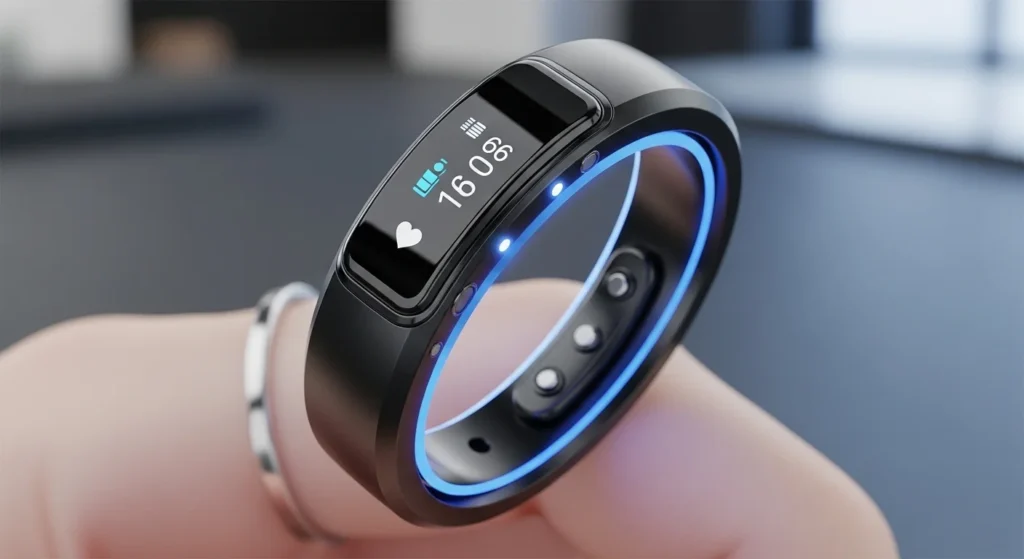
A smart ring is a wearable device in the form of a ring, which has sensors to monitor different biometric data. Depending on the particular ring, it may track heart rate, SpO2 (blood oxygen), skin temperature, sleep, activity and even menstruation. And, more recently, some are starting to include NFC (Near Field Communication) technology for payments.
Oura Ring is currently the most prominent player in this rapidly growing market, and has a strong following in the health tracking sphere. It’s been worn by athletes, CEOs and biohackers for some time. But now there’s more than just Oura. Samsung has recently launched its Galaxy Ring in 2024 and others.
Rings are More Than a Fashion Statement
I was surprised to learn that when I first started researching the science behind where to put sensors, that fingers are great places for biometric sensors. And the finger has a lot of blood vessels right on the skin’s surface, so it’s easier to perform photoplethysmography (PPG) – the optical technique used to sense blood flow – to get an accurate reading than on a wrist.
That’s a real advantage. Smartwatches can’t get good readings when they slide around your wrist or if someone has a gap between the smartwatch and their wrist. A ring, if it fits, doesn’t move around. It won’t jolt around while running, nor slip off while you sleep.
Your Health Tracker, in a Ring
What’s astounding is the technology that has been miniaturised to fit on your hand. The Oura Ring Gen 3, for instance, is home to a number of sensors (infrared LEDs, a temperature sensor, an accelerometer) in a ring that weigh between 4 and 6 grams. After a couple of days you don’t even notice it there.
Smart rings are not only used to track fitness, but in research and clinical trials. Oura has been collaborating with the NBA and different research institutions during the COVID-19 crisis to research early detection of illness using biometric data such as an elevated resting heart rate and temperature. The findings were very encouraging – the ring picked up changes in physiology in advance of illness.
This use case implies smart rings could one day be used for early disease detection, monitoring of chronic conditions and even tracking of psychological conditions via HRV (heart rate variability).
The Design Factor – An End to Ugly
Perhaps the most important marketing factor for smart ring manufacturers is design, and they should be. Wearable devices have traditionally been more or less ugly. The first fitness trackers were medical looking. Smartwatches are often still cumbersome and “techy”. Smart rings don’t have to.
They’re available in elegant metals like silver, gold, black and rose gold that resemble regular rings. This has a huge impact on uptake. People who don’t want to wear a fitness tracker on their wrist will wear a nice-looking ring.
There’s a Dark Side to Every Ring
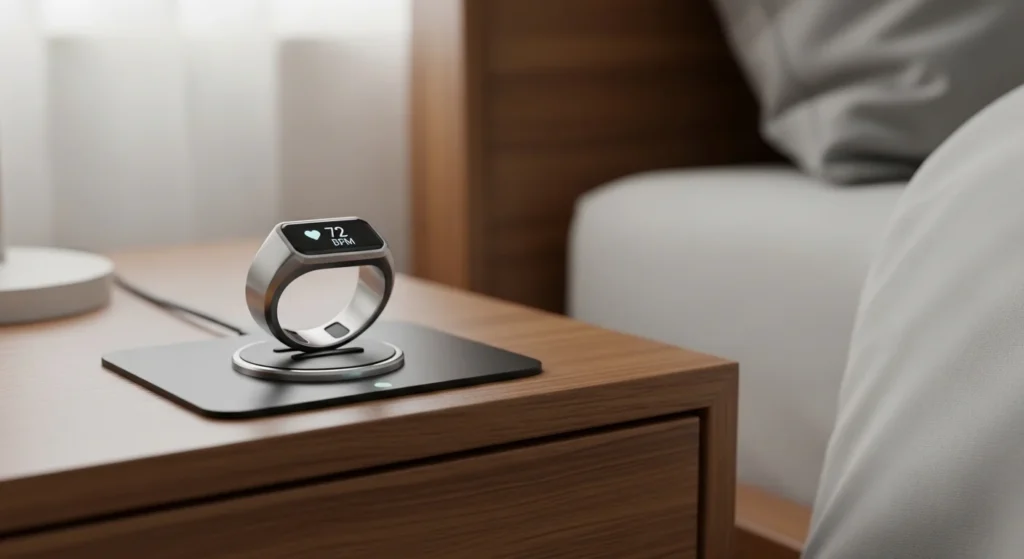
While most rings (4-7 days) have good battery life, you need to charge them and it’s irritating if you lose the charger. No screen is by design, but it means you’re reliant on the app to view your data. Without interacting with the app, the ring’s usefulness is diminished.
There’s also a subscription fee. Oura’s monthly subscription cost to unlock all health data annoys some users who perceive they’ve already paid more than enough for the device. Samsung’s Galaxy Ring doesn’t yet have a subscription fee, which puts it ahead of the competition.
The Future of Smart Rings
Smart rings will be a rapidly expanding market in the coming years, and that makes sense. With shrinking sensors and better batteries, we can expect to see rings that track blood sugar levels, measure hydration and do more advanced heart monitoring.
But the change is cultural. We’re headed into a future where we’ll have continuous and passive health monitoring as a matter of routine – not just for hospital stays or yearly doctors’ visits. Smart rings play well into this. They’re discreet, powerful and ever more advanced.
In a world of devices vying for our attention, there’s a real allure to technology that is discrete, worn on our finger and gets out of the way of our lives.
Frequently Asked Questions
Q: Are smart rings accurate?
Smart rings are not medical devices and accurate enough for monitoring. The data can be used to track trends and patterns, but not for diagnosis.
Q: Are smart rings compatible with non-smartphones?
They can gather data, but need a mobile app to show and interpret this data.
Q: How long does the smart ring battery last?
Typically between 4 to 7 days on a charge, depending on how much you use your smart ring.
Q: Do smart rings get wet?
Yes. Smart rings are generally water-resistant, and can be worn in the shower and while swimming.
Q: Do you have to pay a subscription for a smart ring?
No, not all of them. Oura has a monthly subscription fee but Samsung’s Galaxy Ring does not at this time.
Q: Is it comfortable to sleep in a smart ring?
They are comfortable to wear once you get used to them. Their small size and weight allow most people to wear them comfortably.
Leave a Reply