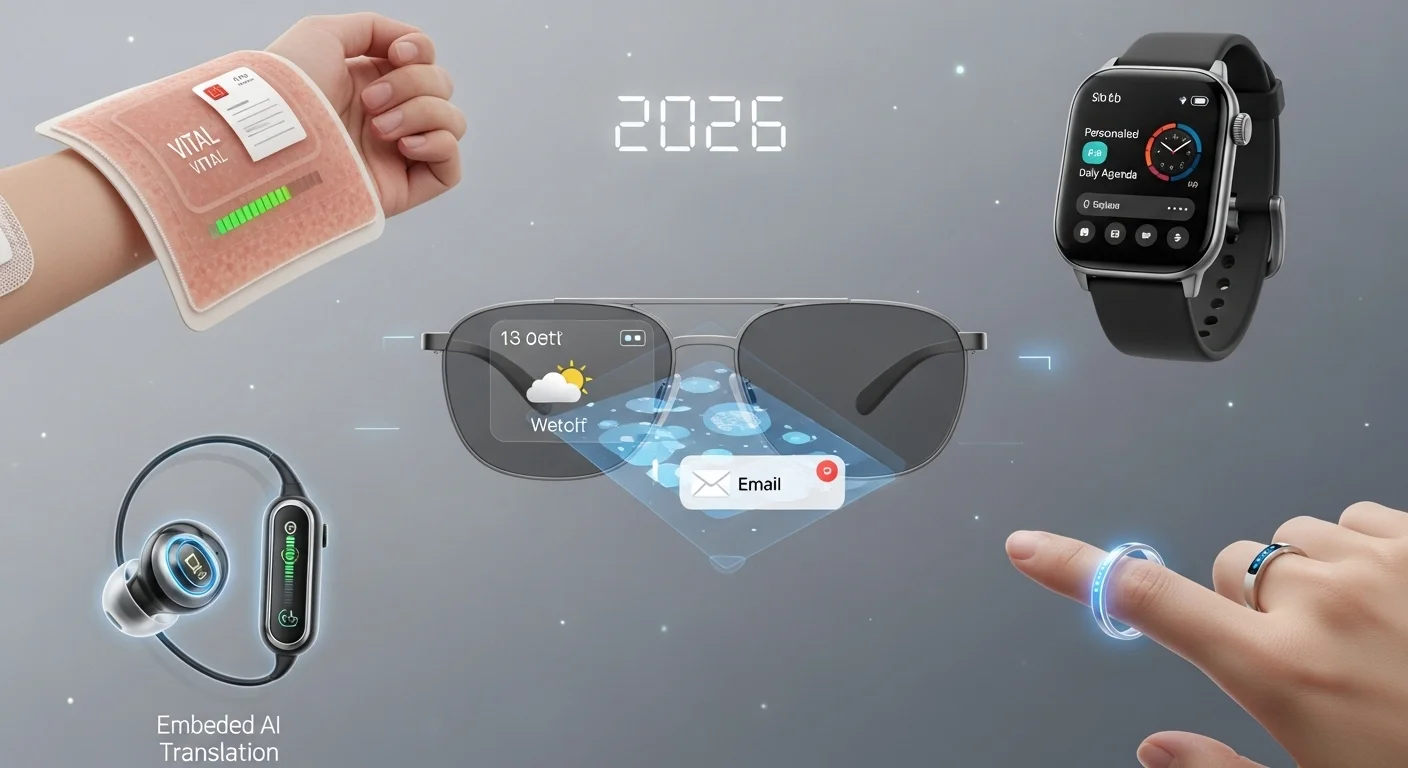
Top AI Wearables Changing Daily Life in 2026, I can recall a time I had a vivid experience in this regard, at the hospital waiting room, when a man, who looked old, took a look at his smartwatch, and without much ado, informed his daughter that his heart rate was irregular, and I believe we should report it to the nurse. It was not a film scene. It was the year before and I still remembered this, as he had a device on his wrist that had the potential to save his life that afternoon.
AI wearables are far beyond the era of the fitness tracker. We are talking about the devices which know your body, see what is going to happen to it, adapt to your mood, and become an inseparable part of your working, movement, and even sleep. The market has been on a boom – worth more than 180 billion worldwide – and the gadgets that propel that figure are truly amazing.
Intelligent Rings: Silent Machines.
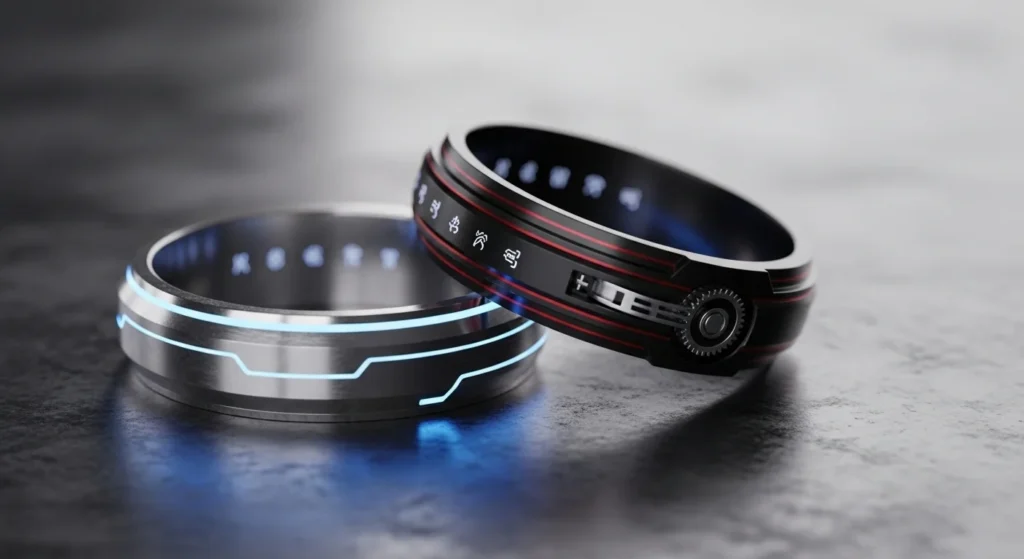
The Oura Ring Gen 4 and its rivals, the Samsung Galaxy Ring being the most notable one, have transformed the capabilities of a so-called passive wearable. These are not the step counters. The newest generation rings have photoplethysmography sensors and on-device AI models to track your sleep architecture, body temperature variations, HRV (heart rate variability), and even the first indicators of an illness (not even feeling ill yet).
What makes 2026’s rings different from even two years ago is the personalization layer. Rather than matching your data to population averages, these devices develop a baseline specific to you in 30-60 days, and then alert you when it deviates and that is significant to your body in particular. The average heart rate of 58 could be normal to you but a cause of alarm to another person. The ring is aware of the difference.
Practical application? The biggest beneficiaries are shift workers, heavy training block athletes, and new parents. One of my friends is a coach of collegiate swimmers and he informed me that his swimmers began maximizing recovery based on ring data instead of perceived effort and the injury rate in his group was significantly reduced within a single season.
Artificial Intelligence-powered Hearing Aid and Earbud.
This type does not have sufficient coverage, and, frankly, it is a pity. The Starkey Genesis AI and Jabra Enhance Select 300 have made it difficult to distinguish between medical hearing aid devices and those aimed at improving conventional hearing.
The AI that occurs within these earbuds is amazing. They are able to single out a voice in a busy restaurant, they are able to reduce the volume of wind noises dynamically, and on the example of the flagship of the Starkey, they can translate the speech in nearly real-time. To the one point five billion humans on planet earth with some level of hearing impairment, it is life changing technology and not a device.
However, even in the case of normal hearing, AI earbuds will be used in 2026 as cognitive aids. Others have real-time meeting transcription, sentiment analysis on the fly in a conversation (scandalous, yet, handy in a sales and negotiation setting), and a dynamic noise management in a situation, where profiles are automatically switched when you leave a gym and enter an office.
Next-Gen Smartwatches: Health Trackers and Notification Centers.
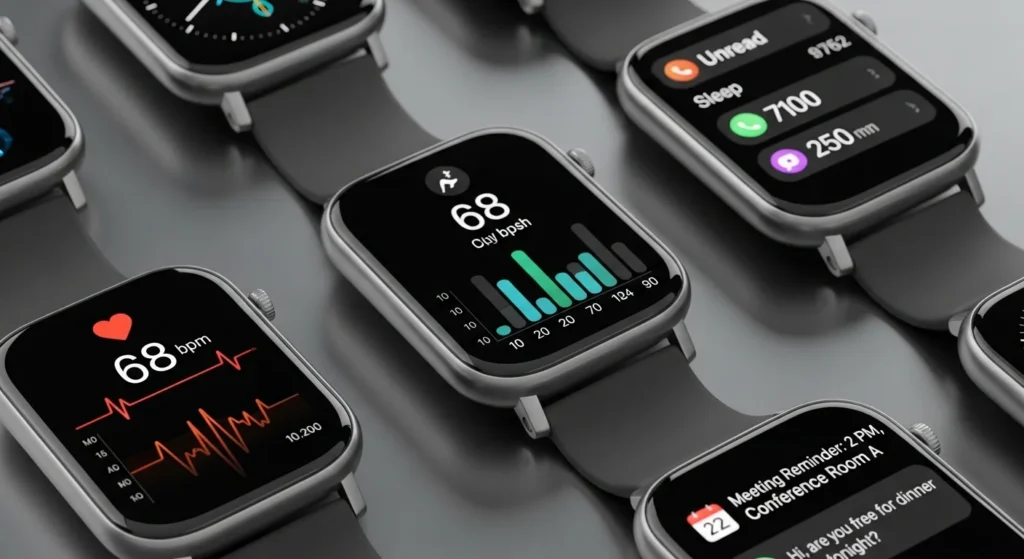
Apple Watch Series 11 and the Samsung Galaxy Watch 8 Ultra provide a considerable improvement over their predecessors, yet so do newcomers on the scene, such as Garmin and Withings. Continuous, clinical-grade health monitoring is the distinguishing characteristic of the best smartwatches of 2026.
Blood glucose monitoring that does not involve finger pricks – not only sought after in the industry over ten years – is at last available to consumers, but performance is inconsistent across brands. The ECG functions, blood oxygen and atrial fibrillation detection algorithms are more reliable and have been FDA approved. The cardiologists are going to a great extent of urging the high-risk patients to wear them in between appointments.
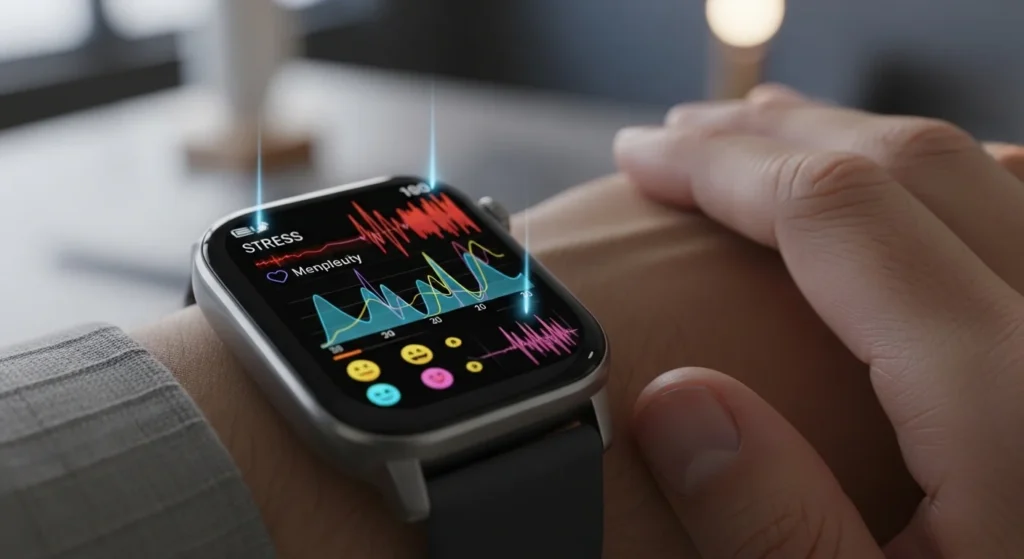
Integration of mental health is a relatively new field. Multiple watch applications have stress scoring systems which are based on HRV, skin conductance and behavioral patterns. When your stress indicators soar regularly on Sunday evenings, your watch not only alarms but also proposes breathing patterns.
AI Glasses: Not So Awkward anymore.
Remember Google Glass? The smart glasses were plagued by the specter of that failure that lasted a decade. The third generation of Meta Ray-Ban Smart Glasses, as well as the competition of such companies as Brilliant Labs has finally discovered what people really want in eyewear.
The wisdom was in subtly. No one desires to have a screen attached to his face. It is the contextual information that is presented in a natural manner that people desire. The current AI glasses have a bone conduction audio and a small display layer that provides you with navigation, reminders, translating in real-time, and environmental consciousness without having to look like you are in an audition to play a role in a sci-fi movie.
Smartwatch Biosensors to monitor Mental and Emotional health.
The emergence of wearables with a mental health focus, perhaps the most silently important of 2026, is perhaps the most impactful. The Apollo Neuro wristband and other devices are being used as a nervous system stimulator that utilizes vibration to stimulate the nervous system to move between focus, calm, and sleep readiness states, which has been demonstrated through peer-reviewed research studies.
The Caveats of a Few Honest Folks.
All this is not flawless. Privacy could be a significant issue – the information that wearables gather about health is incredibly sensitive, and the rules governing data use differ excessively from company to company. Most types of batteries continue to frustrate their users. And there is the actual threat of health anxiety as individuals are focused on every measure.
Final Thought
AI wearable in 2026 is not a science fiction. They’re morning routines. They are why some of us had irregular heartbeats at least in the early days, or why some of us were able to sleep well after months of insomnia, or why some of us could finally figure out why we were always tired on Thursday. The technology has come of age to receive real trust – and that is saying something.
Frequently Asked Questions
Q: Can AI wearables be relied upon to make health decisions?
A number of them are FDA-authorized to be used with certain measurements such as ECG and AFib detection, although the results should be always verified by a medical professional.
Q: What is the most appropriate AI wearable to track sleep in 2026?
Oura Ring Gen 4 and Whoop 5.0 are considered to be the most detailed sleep trackers nowadays.
P: Do AI wearables not need a smartphone?
The vast majority of them need a paired smartphone to be fully functional, but such standalone functions as heart monitoring can operate without a smartphone.
Q: Are wearable health data confidential?
Policies are different by brand. Check the privacy policies of the brands and select ones that have transparent data ownership policies.
Q: Does AI wearable assist in mental health?
The use of devices such as Apollo Neuro is promising as an adjunct tool, but should not substitute professional mental health care.
Leave a Reply